

Male Partner Role in Pregnancy Community: 2026 Guide

Índice
- What is the role of male partner in pregnancy community?
- How do male partners positively influence pregnancy outcomes?
- What barriers limit male partner involvement in pregnancy?
- How do engagement programs improve partner support quality?
- Practical steps for male partners to support during pregnancy
- Key Takeaways
- What I have learned about fathers in pregnancy communities
- Boy or Girl resources for expectant fathers
-
FAQ
- What does a male partner’s role in pregnancy actually include?
- How does a father’s health affect pregnancy outcomes?
- Why do so many male partners stay uninvolved during pregnancy?
- Can structured programs improve how fathers support their partners?
- Should male partners monitor their own mental health during pregnancy?
- Recommended
The role of a male partner in the pregnancy community is to provide consistent emotional, practical, and social support that directly benefits both the expectant mother and the developing baby. This is not a passive role. Research confirms that active male involvement in pregnancy improves maternal health outcomes, reduces stress, and strengthens the family unit from the very start. A 2026 survey of 558 women in South Africa found that 69.2% reported supportive male partners during pregnancy. That number also reveals the gap: 12.1% reported no support at all, often due to paternity denial or abandonment. Fathers who engage early set a foundation that carries through childhood.
What is the role of male partner in pregnancy community?
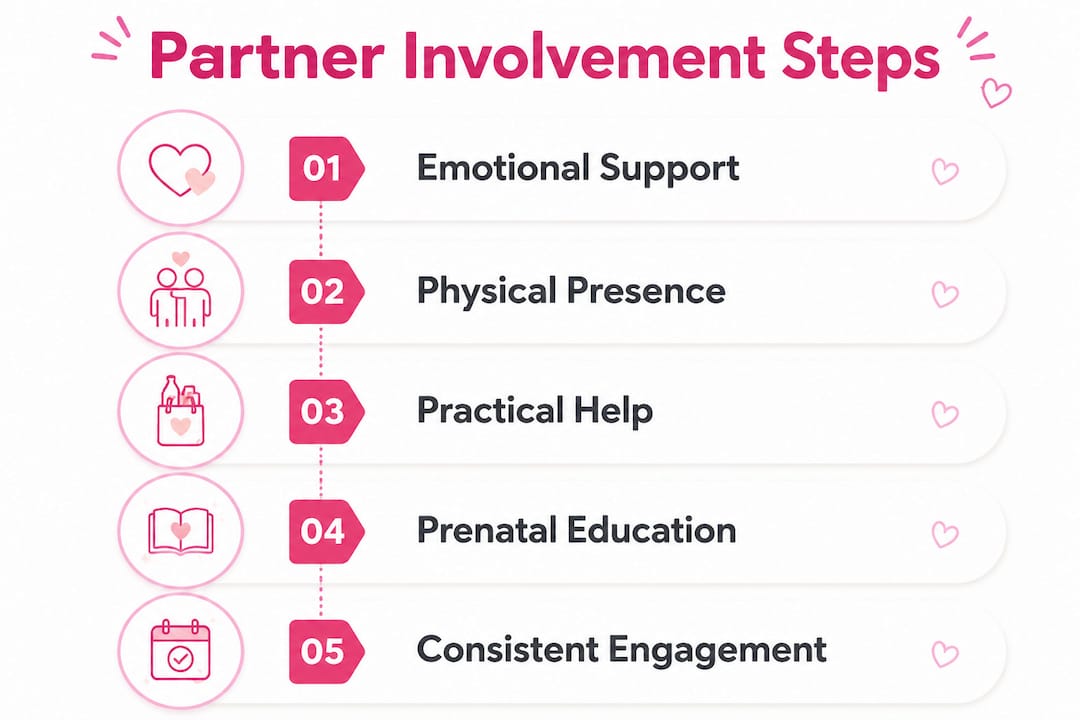
Active male involvement in pregnancy, sometimes called paternal engagement or partner support, covers three core areas: emotional presence, physical participation, and practical help. Each area produces measurable results for the mother and the baby.
Emotional support means listening without judgment, validating your partner’s fears, and staying present through discomfort and uncertainty. Consistent, empathetic presence matters more than perfection. Partners who show up emotionally help reduce maternal anxiety and build trust between both parents before the baby arrives.
Physical participation includes attending prenatal appointments, joining childbirth education classes, and being present during labor. These acts signal to your partner that she is not alone. They also give you direct access to medical information, which helps you ask better questions and make informed decisions together.

Practical help covers household tasks, meal preparation, and managing logistics. Practical partner support reduces maternal stress and conserves energy that is critical for healthy fetal development. When you take on more at home, your partner can rest, recover, and focus on her health.
How do male partners positively influence pregnancy outcomes?
A father’s health directly shapes pregnancy outcomes. Weight, age, and substance use all carry documented effects on conception and fetal development. Research published in The Lancet in 2026 confirmed that paternal health factors can influence pregnancy outcomes as strongly as maternal ones. That finding reframes the conversation: pregnancy health is not only the mother’s responsibility.
Beyond biology, behavioral support produces clear benefits:
- Emotional support and active listening lower maternal cortisol levels, which reduces the risk of preterm birth and low birth weight.
- Attending prenatal appointments keeps fathers informed and gives healthcare providers a fuller picture of the family’s support system.
- Sharing household tasks reduces physical fatigue for the expectant mother, freeing energy for fetal growth.
- Joining childbirth education classes prepares fathers for labor and delivery, reducing panic and improving their ability to advocate for their partner.
- Monitoring your own health before and during pregnancy reduces the risk of passing harmful behaviors or biological factors to the baby.
Father’s early involvement also fosters stronger parent-to-child bonding and better health outcomes extending into childhood. The benefits compound over time.
Pro Tip: Schedule at least one prenatal appointment per trimester as a non-negotiable commitment. Consistency signals reliability to your partner and keeps you informed at every stage.
What barriers limit male partner involvement in pregnancy?
Social norms and cultural expectations remain the biggest obstacles to male involvement in pregnancy. In rural Tanzania, 61.7% of male partners never accompanied their spouses to maternal health services. The same study found that 59.0% held negative attitudes toward this type of involvement. These numbers reflect a global pattern, not an isolated case.
Several specific barriers appear consistently across research:
- Traditional gender norms that define pregnancy as exclusively a woman’s concern
- Workplace inflexibility that makes attending daytime appointments difficult
- Lack of information about what support actually looks like in practice
- Fear of being unwelcome in clinical settings designed primarily for women
- Passive observation habits where partners attend appointments but disengage emotionally
“Passive observation by partners during pregnancy is a common pitfall. Active participation in daily tasks and emotional support produces far more impact than simply being present in the room.”
The South Africa data adds another layer. Among women who reported no support, paternity denial and abandonment were the leading causes. These are not small numbers. They represent a structural failure in how communities and health systems include fathers in the pregnancy process. Traditional pregnancy resources often exclude guidance for male partners entirely, leaving fathers feeling unprepared and sidelined.
How do engagement programs improve partner support quality?
Structured education programs produce measurable improvements in how male partners understand and fulfill their supportive role. The SAPA SUAMI community empowerment program, conducted in Central Kalimantan, Indonesia, is one of the clearest examples from 2026 research.
The program targeted husbands of pregnant women and used community-based social and behavior change communication to shift attitudes and build knowledge. The results were specific and significant.
| Metric | Before Program | After Program |
|---|---|---|
| Mean knowledge score | 8.70 | 9.85 |
| Partners at maximum knowledge level | 70% | 85% |
| Statistical significance | p=0.014 |
Knowledge scores rose by 11.5% after the program, and the share of partners reaching maximum knowledge jumped from 70% to 85%. That shift in knowledge directly translated to improved support behaviors during antenatal care.
Community-based programs work because they meet men where they are. They use peer networks, local leaders, and group learning to normalize male involvement. Behavioral change programs are needed to shift restrictive social norms and reinforce joint decision-making around pregnancy care. Individual effort matters, but systemic change requires community-level intervention.
Pro Tip: If a formal program is not available in your area, find a local fathers’ group or online community. Peer learning from other expectant fathers accelerates your understanding faster than reading alone.
Practical steps for male partners to support during pregnancy
Knowing you want to help and knowing how to help are two different things. These steps give you a clear starting point.
- Practice active listening. When your partner shares a fear or complaint, resist the urge to fix it immediately. Acknowledge what she said first. Say “that sounds really hard” before offering solutions.
- Attend prenatal visits together. Ask the doctor or midwife questions directly. Write them down beforehand so you do not forget in the moment.
- Take over specific household tasks. Do not wait to be asked. Claim ownership of cooking dinner three nights a week, handling grocery runs, or managing laundry. Specific commitments are more reliable than vague offers to “help.”
- Join a childbirth education class. These classes cover labor stages, pain management options, and newborn care. You will leave better prepared and less anxious.
- Practice skin-to-skin contact after birth. Skin-to-skin contact with your newborn regulates infant temperature, reduces crying, and builds bonding. The benefits mirror those seen with maternal skin-to-skin contact.
- Monitor your own mental health. About 1 in 10 non-birthing partners experience postpartum depression or anxiety. This often goes unrecognized. If you feel persistently low, disconnected, or overwhelmed, talk to a healthcare provider.
Beyond these steps, stay connected to your partner’s emotional state week by week. Pregnancy changes rapidly. What she needed in the first trimester may be completely different from what she needs in the third. Check in regularly. Ask directly: “What would help you most this week?”
You can also find community support through tips for dads at Boy or Girl, which covers the emotional and mental health dimensions of the partner role in depth. Connecting with other fathers through a pregnancy forum also helps normalize the experience and reduce isolation.
Key Takeaways
Active male partner involvement in pregnancy produces documented benefits for maternal health, fetal development, and long-term family bonding, making consistent engagement the single most impactful action an expectant father can take.
| Point | Details |
|---|---|
| Paternal health matters | A father’s weight, age, and substance use influence pregnancy outcomes as strongly as maternal factors. |
| Support gaps are real | In South Africa, 12.1% of pregnant women report no partner support, often due to abandonment or paternity denial. |
| Education programs work | The SAPA SUAMI program raised partner knowledge scores from 8.70 to 9.85 and lifted top performers from 70% to 85%. |
| Passive presence is not enough | Active daily participation in tasks and emotional support produces far greater impact than simply attending appointments. |
| Partner mental health counts | About 1 in 10 non-birthing partners develop postpartum depression or anxiety, a risk that requires active monitoring. |
What I have learned about fathers in pregnancy communities
At Boy or Girl, we talk with expectant families every day. The most common thing fathers tell us is that they did not realize how much they did not know. They assumed pregnancy was something that happened to their partner, not something they were part of. That assumption costs everyone.
The fathers who make the biggest difference are not the ones who do everything perfectly. They are the ones who stay curious and stay present. They ask questions at appointments. They notice when their partner is exhausted before she has to say it. They do not wait for a crisis to get involved.
One thing I find consistently underestimated is the impact of a father’s own health on the pregnancy. Most men have never been told that their weight or lifestyle choices affect fetal outcomes. Once they understand that, their motivation to change shifts from abstract to personal.
The other thing worth saying plainly: this role is hard. You are supporting someone through a physically and emotionally demanding experience while managing your own fears about parenthood. That is a real weight. Seeking support for yourself is not a distraction from supporting your partner. It makes you better at it.
The pregnancy community is stronger when fathers are genuinely in it, not just adjacent to it.
Boy or Girl resources for expectant fathers
Expectant fathers often need a starting point that speaks directly to them, not just to the pregnant partner. Boy or Girl offers resources built for that exact need.

The XY Method at Boy or Girl gives expectant families access to pregnancy prediction tools and partner-focused features designed to keep fathers engaged from early pregnancy onward. The platform also connects you to a community of families navigating the same experience, so you are not figuring this out alone. Whether you want to understand what your partner is going through week by week or find practical ways to show up better, Boy or Girl has the tools and the community to support you.
FAQ
What does a male partner’s role in pregnancy actually include?
A male partner’s role covers emotional support, physical presence at appointments, and practical help with household tasks. All three areas produce measurable benefits for maternal health and fetal development.
How does a father’s health affect pregnancy outcomes?
Research published in The Lancet in 2026 confirmed that paternal factors like weight, age, and substance use can influence pregnancy outcomes as strongly as maternal health factors.
Why do so many male partners stay uninvolved during pregnancy?
Traditional gender norms, lack of information, and clinical environments designed primarily for women all reduce male involvement. In rural Tanzania, 61.7% of male partners never accompanied their spouses to maternal health services.
Can structured programs improve how fathers support their partners?
Yes. The SAPA SUAMI program in Indonesia raised partner knowledge scores significantly and increased the share of partners reaching maximum knowledge from 70% to 85% after a single community-based intervention.
Should male partners monitor their own mental health during pregnancy?
Absolutely. About 1 in 10 non-birthing partners develop postpartum depression or anxiety. Recognizing the signs early and seeking help protects both the father and the family.
Visita nuestras redes sociales
Recommended
Track Pregnancy Milestones With a Platform Dashboard

Why Maternal Instinct Gender Prediction Works

What Is a Pregnancy Smoothie Diet? Your Prenatal Guide

Pregnancy Meal Planning Best Practices for New Moms

Pregnancy Nesting Instinct: Guide for First-Time Moms

Pregnancy Announcement Timing Examples: A Real Guide