
What Is a Pregnancy Smoothie Diet? Your Prenatal Guide
Índice
- What is a pregnancy smoothie diet and why does it matter?
- What nutrients are essential in pregnancy smoothies?
- How do you build a safe and balanced pregnancy smoothie?
- What are the best pregnancy smoothie recipes for different needs?
- What are the benefits of a smoothie diet during pregnancy?
- Key Takeaways
- What I’ve learned from helping pregnant women eat well
- Personalized pregnancy nutrition with Boy or Girl
- FAQ
- Recommended
A pregnancy smoothie diet is defined as a daily practice of consuming nutrient-dense blended meals that deliver protein, folate, calcium, and fiber to support both maternal and fetal health. These are not casual fruit drinks. They are carefully assembled meals that meet the elevated nutritional demands of pregnancy in about 5 minutes of preparation. The American Pregnancy Association recognizes vitamin B6, iron, and folate as critical prenatal nutrients, all of which you can pack into a single glass. This guide explains what goes into a pregnancy smoothie diet, how to build one safely, and why it works so well for expectant mothers.
What is a pregnancy smoothie diet and why does it matter?
A pregnancy smoothie diet integrates nutrient-dense blended meals with protein, healthy fats, and fiber-rich fruits and vegetables to meet pregnancy’s caloric and micronutrient demands efficiently. The key word is “integrated.” These smoothies are not a replacement for all food, but they function as a reliable nutritional anchor in a day when nausea, fatigue, or food aversions make eating a full meal feel impossible.
Pregnancy raises your need for nearly every nutrient. Protein supports fetal muscle and organ development. Folate prevents neural tube defects. Calcium builds fetal bones. Fiber keeps digestion moving when progesterone slows everything down. A single well-built smoothie can address all four of these needs at once, which is why registered dietitians increasingly recommend them as part of a prenatal eating plan.
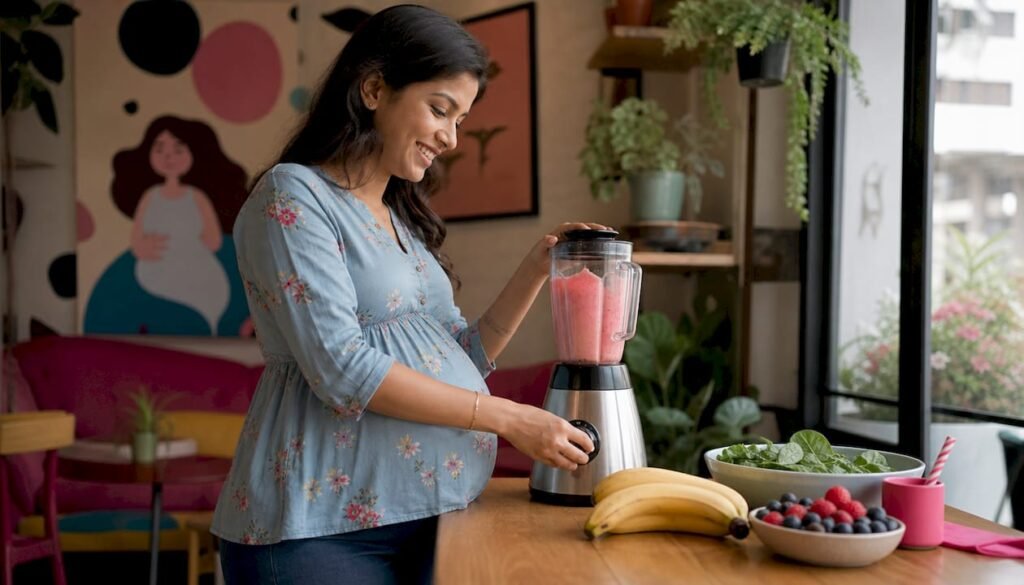
The convenience factor is real and significant. Most smoothies take about 5 minutes to prepare. For a pregnant woman managing morning sickness, work, and a changing body, that speed matters. Frozen ingredients make it even faster, and they preserve nutrients just as well as fresh produce.
What nutrients are essential in pregnancy smoothies?
Protein for fetal and maternal growth
Protein is the most critical macronutrient in a pregnancy smoothie. Your daily protein requirement during pregnancy is 75–100 grams, and smoothies can meaningfully close the gap. Greek yogurt, cottage cheese, hemp hearts, and pregnancy-safe protein powders are the best sources to blend in. Each of these options adds creaminess alongside nutrition, so the texture improves as the protein content rises.
Healthy fats for brain development
Healthy fats do two jobs in a pregnancy smoothie. They support fetal brain development, and they help your body absorb fat-soluble vitamins. The fat-soluble vitamins A, D, E, and K all require dietary fat to be absorbed properly. Avocado, almond butter, sunflower seed butter, and chia seeds are the most practical fat sources for smoothies. One quarter of an avocado or one tablespoon of nut butter is enough to activate fat-soluble vitamin absorption in a single serving.
Fiber, vitamins, and minerals
- Fiber: Fewer than 30% of pregnant women meet their daily fiber requirements. Fiber-rich smoothie ingredients like spinach, kale, frozen berries, and flaxseed directly combat the constipation that progesterone causes.
- Folate: Spinach, avocado, and frozen edamame are strong folate sources for blending.
- Iron: Spinach, kale, tofu, and dark berries provide non-heme iron. Pairing them with vitamin C-rich fruits like strawberries or citrus enhances iron absorption from plant sources.
- Vitamin B6: Bananas, avocado, and spinach all supply B6 naturally. Vitamin B6-rich ingredients like these also reduce early pregnancy nausea and support fetal brain development.
- Calcium: Milk, kefir, and fortified plant milks deliver calcium without requiring a separate supplement.
Pro Tip: Add a small handful of spinach to every smoothie. It blends invisibly into fruit-based recipes, and you get folate, iron, and fiber without changing the flavor.
How do you build a safe and balanced pregnancy smoothie?
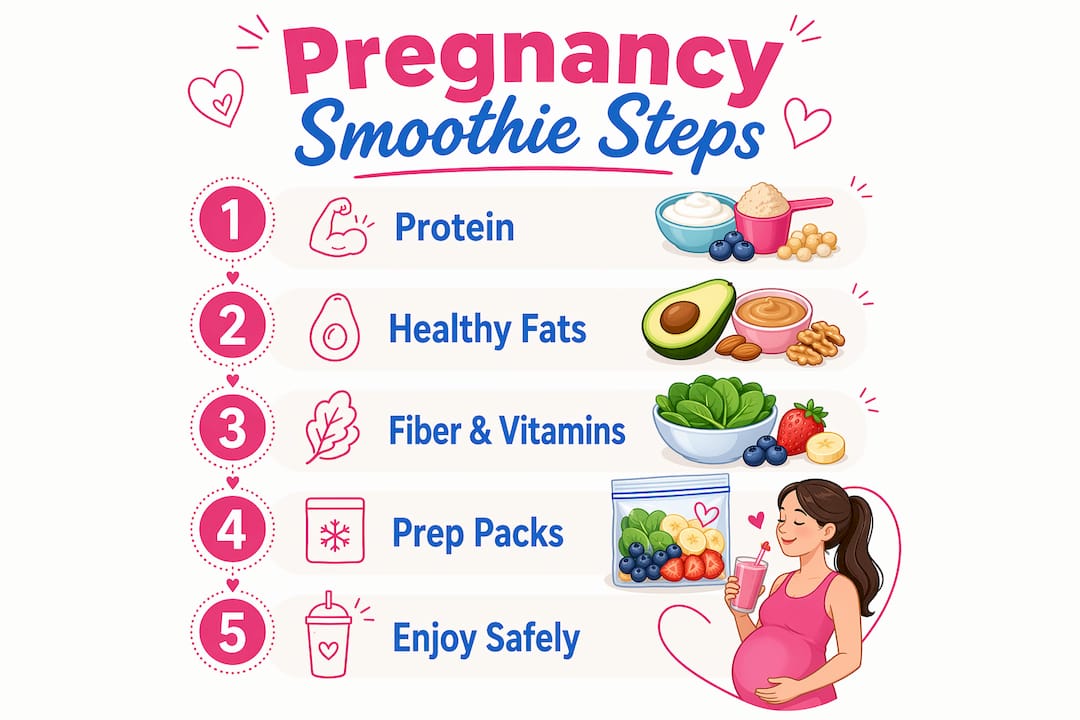
Building a pregnancy smoothie correctly means following a reliable structure. Dietitians recommend a balanced ingredient ratio of 1 cup liquid, 1 cup yogurt or protein source, half a cup of frozen fruit, and 1–2 tablespoons of healthy fats or seeds. That ratio gives you a smoothie that fills you up, stabilizes blood sugar, and delivers real nutrition rather than a sugary drink disguised as a health food.
- Choose your liquid base. Milk, kefir, unsweetened coconut water, or fortified plant milk all work well. Each adds hydration and some nutrients. Kefir adds probiotics, which support gut health during pregnancy.
- Add your protein source. Greek yogurt and cottage cheese are the most practical whole-food options. If you use a protein powder, select one with minimal additives and ingredients that are confirmed safe for pregnancy. Read the label carefully.
- Add frozen or fresh produce. Frozen fruits and vegetables preserve nutrients and speed up preparation. Frozen spinach, mango, berries, and banana are reliable staples.
- Include a fat source. One quarter of an avocado, one tablespoon of nut butter, or one tablespoon of chia or flaxseed covers your fat needs for the smoothie.
- Blend and consume fresh. Smoothies are best consumed immediately. If you need to store one, use an airtight BPA-free container and refrigerate up to 24 hours. Shake or re-blend before drinking to restore texture.
Pro Tip: Prep smoothie “packs” by portioning frozen fruit, spinach, and seeds into zip-lock bags the night before. In the morning, dump the pack into the blender, add liquid and yogurt, and blend. Total time: under 3 minutes.
What are the best pregnancy smoothie recipes for different needs?
Different pregnancy symptoms call for different smoothie formulas. The table below shows four targeted variations.
| Need | Key Ingredients | Why It Works |
|---|---|---|
| High iron for anemia prevention | Spinach, kale, frozen berries, orange juice | Vitamin C from citrus boosts non-heme iron absorption |
| Nausea relief | Banana, ginger, coconut water, Greek yogurt | Ginger reduces nausea; cold and creamy texture is easy to tolerate |
| Reflux and low-acid | Banana, almond milk, oats, almond butter | Avoids citrus and tomato; oats buffer stomach acid |
| Energy and satiety | Peanut butter, banana, oats, milk, hemp hearts | Balanced macros sustain energy between meals |
Beyond the table, you can customize any base recipe by trimester. In the first trimester, prioritize ginger and B6-rich ingredients like banana and avocado to manage nausea. In the second and third trimesters, shift toward higher protein and iron content as fetal growth accelerates. Pregnant women with gestational diabetes should skip added sweeteners and limit high-glycemic fruits like mango and pineapple, favoring berries and green vegetables instead.
- For dairy-free diets, swap Greek yogurt for silken tofu or a pea protein powder.
- For nut allergies, use sunflower seed butter or hemp hearts as your fat and protein source.
- For women with hyperemesis gravidarum, keep smoothies cold, small in volume, and low in strong flavors. Plain banana, coconut water, and a small amount of protein powder is a good starting point.
What are the benefits of a smoothie diet during pregnancy?
Smoothies deliver hydration alongside nutrition. Pregnant women need 8–12 cups of water daily to support amniotic fluid production and blood volume expansion. A 16-ounce smoothie made with milk or coconut water contributes meaningfully to that target without requiring you to drink plain water when nausea makes it unappealing.
Digestion is another clear benefit. Liquid meals empty the stomach faster than solid food, which reduces feelings of fullness and heartburn. This matters most in the second and third trimesters when the growing baby compresses the stomach. A smoothie gives your body the nutrition it needs without triggering the discomfort that a large solid meal often causes.
Smoothies are ideal during pregnancy nausea or food aversions because they have subtle aromas and are cold, creamy, and easy to consume without chewing. That combination makes them one of the few foods that feel tolerable when almost nothing else does.
Blood sugar stability is a less obvious but equally important benefit. A smoothie built with protein, fat, and fiber slows glucose absorption. That prevents the blood sugar spikes and crashes that worsen nausea and fatigue in early pregnancy. A fruit-only smoothie does the opposite, so the protein and fat components are not optional additions. They are the mechanism that makes the smoothie actually work.
For busy or nauseous mothers, the time savings are also real. Healthy smoothies for pregnant women require no cooking, minimal cleanup, and no complex planning. You can learn more about managing nutrition during pregnancy events and social situations where eating well gets harder.
Key Takeaways
A pregnancy smoothie diet works because it combines protein, healthy fats, and fiber-rich produce into a fast, digestible meal that meets the elevated nutritional demands of pregnancy.
| Point | Details |
|---|---|
| Protein is non-negotiable | Aim for 75–100 grams of protein daily; smoothies with Greek yogurt or hemp hearts help close the gap. |
| Fat activates vitamins | Add avocado or nut butter to every smoothie so fat-soluble vitamins A, D, E, and K absorb properly. |
| Fiber fights constipation | Fewer than 30% of pregnant women meet fiber needs; spinach, flaxseed, and berries fix that fast. |
| Storage has a hard limit | Refrigerate smoothies in BPA-free containers and consume within 24 hours for safety and texture. |
| Customize by symptom | Match ingredients to your trimester and symptoms: ginger for nausea, iron-rich greens for anemia, low-acid bases for reflux. |
What I’ve learned from helping pregnant women eat well
The most common mistake I see is building a smoothie around fruit juice alone. A cup of orange juice, a banana, and some frozen mango tastes great, but it functions more like a dessert than a prenatal meal. It spikes blood sugar, provides almost no protein, and leaves you hungry within an hour. That is the opposite of what you need when you are already exhausted and nauseous.
The fix is simple but requires intention. Every smoothie needs a protein anchor and a fat source before you add any fruit. Build the structure first, then add flavor. When you do it in that order, the smoothie becomes genuinely satisfying and nutritionally complete.
The other thing I tell every expectant mother: do not wait until you are starving to make your smoothie. Prepare it first thing in the morning or the night before. Hunger during pregnancy escalates fast, and when it does, you reach for whatever is easiest. Having a smoothie ready means the easiest option is also the best one.
Always check with your OB or midwife before adding protein powders or supplements to your smoothies. Most whole-food smoothie ingredients are safe, but individual health conditions and medication interactions vary. Your provider knows your full picture.
Personalized pregnancy nutrition with Boy or Girl
Knowing what to put in a pregnancy smoothie is one thing. Having a plan that fits your specific pregnancy is another.

Boy or Girl offers personalized nutrition guidance built specifically for expectant mothers, including trimester-specific recommendations that align with your body’s changing needs. The platform combines expert advice, wellness tips, and community support so you are never figuring things out alone. Whether you are managing nausea in the first trimester or building iron stores in the third, Boy or Girl gives you the tools to eat well without the guesswork. Visit the Boy or Girl pregnancy app to access personalized guidance that supports a healthy and happy pregnancy from week one.
FAQ
What is a pregnancy smoothie diet exactly?
A pregnancy smoothie diet is a structured approach to prenatal nutrition where blended meals made with protein, healthy fats, fiber-rich fruits, and vegetables replace or supplement regular meals to meet elevated pregnancy nutrient needs.
Is a smoothie diet safe during pregnancy?
Smoothies made with whole-food ingredients like Greek yogurt, spinach, fruit, and nut butter are safe and beneficial during pregnancy. Always consult your healthcare provider before adding protein powders or herbal supplements.
What should I always include in a pregnancy smoothie?
Every pregnancy smoothie should include a protein source, a healthy fat, and at least one fruit or vegetable. That combination stabilizes blood sugar, supports fetal development, and keeps you full longer than fruit-only blends.
Can smoothies help with pregnancy nausea?
Yes. Cold, creamy smoothies with ginger, banana, and coconut water are among the most tolerable foods during nausea because they have subtle aromas and require no chewing. Vitamin B6 from banana and avocado also directly reduces nausea symptoms.
How long can I store a pregnancy smoothie?
Store smoothies in an airtight BPA-free container in the refrigerator for up to 24 hours. Shake or re-blend before drinking to restore the texture. Do not store beyond 24 hours.
Visita nuestras redes sociales
Recommended
Pregnancy Meal Planning Best Practices for New Moms

Pregnancy Nesting Instinct Explained for First-Time Moms

Why Maternal Instinct Gender Prediction Works

Pregnancy Announcement Timing Examples: A Real Guide

Why Mobile-First Design Suits Pregnancy Platforms

Pregnancy Milestone Celebrations: Build Your Community