


Pregnancy Symptoms Week by Week: First-Time Mom's Guide

Índice
- What are the earliest pregnancy symptoms and when do they begin?
- How do pregnancy symptoms evolve through the first trimester (weeks 1–13)?
- What changes and symptoms are common in the second trimester (weeks 14–26)?
- What should mothers expect symptom-wise during the third trimester (weeks 27–40)?
- How can tracking weekly symptoms help you manage your health?
- Key Takeaways
- What I have learned from supporting mothers through every trimester
- How Boy or Girl supports your weekly pregnancy tracking
- FAQ
- Recommended
Pregnancy symptoms week by week describe the physical and emotional changes your body goes through from the moment of conception to birth. These changes are driven by rising hCG hormone levels, progesterone surges, and the rapid growth of your baby. No two pregnancies are identical, and symptom timing varies based on genetics and personal health history. Understanding the general weekly pattern gives you confidence, not confusion. This guide walks you through every stage so you know what is normal, what to watch for, and when to call your doctor.
What are the earliest pregnancy symptoms and when do they begin?
Early pregnancy symptoms typically appear 4–6 weeks after your last menstrual period, which corresponds to rising hCG levels after implantation. Implantation itself occurs 6–12 days after ovulation. That timing matters because hCG doubles every 48–72 hours in early pregnancy, and your body does not produce noticeable symptoms until those levels climb high enough to trigger physical changes.
The very first sign many mothers notice is implantation spotting. This light bleeding happens 6–12 days after ovulation and is easily mistaken for the start of a period. It is lighter in color, shorter in duration, and not accompanied by the heavier flow of a normal cycle.
Common early signs to watch for include:
- Missed period. The most reliable early signal, especially if your cycle is regular.
- Fatigue. Progesterone drives fatigue by slowing your metabolism and increasing your body’s workload from week one.
- Breast tenderness. Hormonal shifts cause breast tissue to swell and become sensitive, often before a missed period.
- Nausea. Most mothers notice nausea starting around week 5 or 6, tied directly to rising hCG.
- Frequent urination. Your kidneys begin filtering more blood almost immediately after implantation.
- Mood changes. Hormonal fluctuations affect brain chemistry quickly, causing emotional sensitivity even in the first few weeks.
Pro Tip: Test for pregnancy after a missed period, not before. Testing too early produces false negatives because hCG levels are still too low for most home tests to detect.
Symptom intensity at this stage is mild for most mothers. Some women feel almost nothing before week 6, while others feel exhausted and nauseous by week 4. Both experiences are within the normal range.
How do pregnancy symptoms evolve through the first trimester (weeks 1–13)?
The first trimester is the most symptom-heavy period for most mothers. Your body is building the placenta, establishing hormonal dominance, and supporting rapid fetal growth, all at the same time. That workload shows up physically.
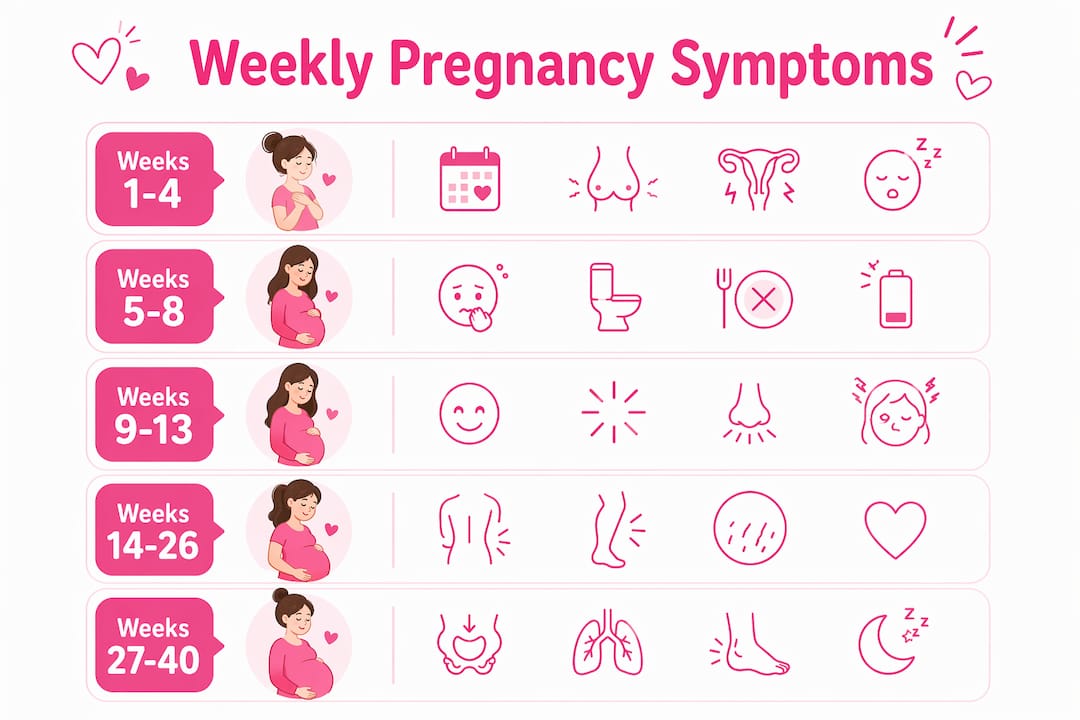
Here is how symptoms typically progress week by week through the first trimester:
- Weeks 1–4. Minimal or no symptoms. Implantation may cause light spotting. Fatigue begins as progesterone rises. Check week 1 development for what is happening in your body right now.
- Weeks 5–6. Nausea begins. Breast tenderness intensifies. Frequent urination increases. Mood swings become noticeable.
- Weeks 7–9. Peak discomfort. Morning sickness peaks between weeks 8–10. Fatigue is at its heaviest. Many mothers experience food aversions and heightened smell sensitivity. See what is happening at week 7 and week 8 for context on fetal development driving these changes.
- Weeks 10–11. Symptoms remain strong but may begin to plateau. Headaches and dizziness are common as blood volume increases.
- Weeks 12–13. Nausea begins to ease for most mothers. Energy slowly returns. The placenta takes over hormone production from the corpus luteum, which often reduces symptom intensity.
One symptom that surprises many first-time mothers is “pregnancy brain.” This medically recognized cognitive fogginess results from hormonal neurochemical changes in the first trimester. Forgetting words, losing focus, and feeling mentally slow are all normal.
Emotional changes are equally real. Hormonal fluctuations cause mood swings throughout the first trimester, and staying in regular contact with your healthcare provider supports your emotional wellbeing.

Pro Tip: If vomiting is so severe that you cannot keep fluids down for more than 24 hours, contact your doctor immediately. Persistent severe vomiting is a sign of hyperemesis gravidarum, a condition that requires medical treatment.
What changes and symptoms are common in the second trimester (weeks 14–26)?
The second trimester is widely considered the most comfortable phase of pregnancy. Nausea fades for most mothers, energy returns, and the baby bump becomes visible. That said, new symptoms replace the old ones as your body continues to change.
Maternal blood volume increases by nearly 50% during pregnancy, and the second trimester is when this surge becomes most noticeable. More blood circulating through your body causes nosebleeds, bleeding gums, and a flushed complexion. These are normal responses to increased circulation, not signs of illness.
Common second trimester symptoms include:
- Visible baby bump. Most mothers begin showing between weeks 16–20. Check week 21 development for what your baby looks like at this stage.
- Round ligament pain. This sharp, brief pain on one or both sides of your lower abdomen happens when the ligaments supporting your uterus stretch. It is a normal second trimester experience and often triggered by sudden movements or position changes.
- Back pain. Your center of gravity shifts as your belly grows, placing new strain on your lower back.
- Skin changes. Increased blood flow and oil production create the “pregnancy glow.” Some mothers also develop a dark line down the abdomen called the linea nigra, or notice changes in skin pigmentation.
- Increased energy. Most mothers feel noticeably more energetic between weeks 14–20 compared to the first trimester.
| Symptom | Typical onset | Primary cause |
|---|---|---|
| Round ligament pain | Weeks 14–16 | Uterine ligament stretching |
| Visible baby bump | Weeks 16–20 | Uterine growth |
| Nosebleeds and bleeding gums | Weeks 14–20 | 50% blood volume increase |
| Pregnancy glow | Weeks 14–20 | Increased blood flow and oil production |
| Back pain | Weeks 18–26 | Shifting center of gravity |
Emotional changes in the second trimester tend to stabilize compared to the first. Many mothers feel more settled and connected to their pregnancy once they can feel fetal movement, which typically begins between weeks 18–22.
What should mothers expect symptom-wise during the third trimester (weeks 27–40)?
The third trimester brings a return of physical discomfort as your baby grows rapidly and space inside your body becomes limited. Symptoms during this phase are largely mechanical, driven by the baby’s size and position rather than hormonal surges.
Key symptoms to expect in the third trimester include:
- Braxton Hicks contractions. These practice contractions begin as early as week 28 and feel like a tightening across your abdomen. They are irregular and painless, unlike true labor contractions.
- Swelling. Fluid retention causes swelling in the feet, ankles, and hands, especially later in the day. Mild swelling is normal. Sudden or severe swelling in the face or hands warrants a call to your doctor.
- Shortness of breath. As your uterus expands upward, it presses against your diaphragm and reduces lung capacity.
- Frequent urination returns. The baby’s head drops lower in your pelvis in preparation for birth, pressing directly on your bladder.
- Sleep difficulties. Finding a comfortable position becomes harder. Many mothers use a pregnancy pillow to support the belly and reduce hip pressure.
- Nesting behavior. A sudden urge to clean, organize, and prepare the home is driven by hormonal changes that signal approaching labor. It typically peaks in the final weeks.
Fatigue returns strongly in the third trimester. Your body is carrying significantly more weight, your sleep is disrupted, and your organs are working harder than at any other point in your life. Rest is not optional at this stage.
Physical signs that labor is approaching include the baby “dropping” lower in your pelvis, increased pelvic pressure, a mucus plug discharge, and regular tightening contractions. Tracking these changes at week 35 and beyond helps you recognize the difference between normal late pregnancy discomfort and true labor signals.
How can tracking weekly symptoms help you manage your health?
Tracking your symptoms week by week gives you a clear picture of what is normal for your body. That knowledge helps you communicate more effectively with your healthcare provider and catch anything unusual early.
The most practical tracking method is a simple daily log. Note the symptom, its intensity on a scale of 1–10, and the time of day it occurs. Patterns emerge quickly. You may notice that nausea peaks in the morning and eases by afternoon, or that fatigue is worst on days when you skip protein at breakfast. That information is far more useful to your doctor than a general complaint of “feeling sick.”
Understanding the difference between normal and concerning symptoms is the most valuable skill you can develop. Normal symptoms follow the weekly pregnancy timeline. Concerning symptoms include heavy bleeding at any stage, severe abdominal pain, sudden swelling in the face, vision changes, or a significant decrease in fetal movement after week 28. Any of these requires immediate medical attention.
Pro Tip: Bring your symptom log to every prenatal appointment. Doctors and midwives make better decisions when they have specific data rather than general descriptions. A written record also helps you remember details you might forget under the stress of an appointment.
Emotional health tracking matters as much as physical symptom tracking. Open communication with your healthcare provider about mood changes, anxiety, and emotional challenges improves overall pregnancy wellbeing. You do not have to manage those feelings alone.
Key Takeaways
Understanding pregnancy symptoms week by week helps first-time mothers distinguish normal changes from warning signs, communicate clearly with their care team, and feel prepared at every stage.
| Point | Details |
|---|---|
| Symptoms begin at weeks 4–6 | Rising hCG after implantation triggers the first physical signs, including fatigue, nausea, and breast tenderness. |
| First trimester peaks at weeks 7–9 | Nausea and fatigue are most intense during this window; symptoms ease for most mothers by week 13. |
| Second trimester brings new symptoms | Blood volume increases by nearly 50%, causing nosebleeds, glow, and round ligament pain alongside a visible bump. |
| Third trimester is mechanical discomfort | Baby size drives Braxton Hicks contractions, swelling, and sleep difficulties as the body prepares for labor. |
| Symptom tracking improves care | A daily log of symptoms and intensity helps you communicate precisely with your healthcare provider. |
What I have learned from supporting mothers through every trimester
The most common mistake I see first-time mothers make is comparing their pregnancy to someone else’s. One mother feels no nausea at all. Another is sick every day until week 16. Both are having healthy pregnancies. The variability is real and normal, and treating someone else’s experience as the standard for your own creates unnecessary anxiety.
What actually helps is specificity. Mothers who track their symptoms in detail, even just a few sentences a day, consistently report feeling more in control. They walk into prenatal appointments with real information instead of vague worry. Their doctors respond better. Their care improves.
The second thing I would tell every first-time mother is this: the third trimester discomfort is not a sign that something is wrong. It is a sign that your baby is healthy and growing. The pressure, the sleeplessness, the Braxton Hicks contractions — these are your body doing exactly what it is supposed to do. Reframing discomfort as progress makes a real difference in how you experience those final weeks.
Pregnancy also has an emotional dimension that medical guides often underplay. Mood swings, anxiety, and moments of doubt are not weakness. They are a normal response to one of the most significant physical and hormonal events a human body can go through. Talking to your provider about emotional symptoms is just as important as reporting physical ones. You deserve support for both.
How Boy or Girl supports your weekly pregnancy tracking
Knowing what to expect each week is one thing. Having a trusted resource that walks you through every milestone makes the experience far less stressful.
Boy or Girl is built specifically for expectant mothers who want clear, week-by-week guidance on fetal development and maternal symptoms. The platform combines expert-backed weekly updates with personalized tools, including the XY chromosomal prediction method for mothers curious about their baby’s gender. Each week’s content is tailored to where you actually are in your pregnancy, not a generic overview. You also get access to a supportive community of mothers at every stage, plus expert consultations and pregnancy care resources to help you feel prepared and supported from week 1 through delivery.
FAQ
When do pregnancy symptoms typically start?
Most mothers notice their first symptoms 4–6 weeks after their last menstrual period, when hCG levels are high enough to trigger physical changes. Implantation spotting may appear earlier, around 6–12 days after ovulation.
What are the most common first trimester symptoms?
Fatigue, nausea, breast tenderness, frequent urination, and mood swings are the most common first trimester symptoms. Nausea typically peaks between weeks 8–10 and eases for most mothers by week 14.
Is it normal to have no pregnancy symptoms?
Yes. Symptom intensity varies widely based on genetics and individual health. Some mothers experience very few symptoms and still have healthy pregnancies. Absence of symptoms alone is not a cause for concern.
What is round ligament pain?
Round ligament pain is a sharp, brief pain on one or both sides of the lower abdomen, common in the second trimester. It is caused by the ligaments supporting the uterus stretching as the baby grows and is triggered by sudden movements or position changes.
When should I call my doctor about pregnancy symptoms?
Call your doctor immediately if you experience heavy bleeding, severe abdominal pain, sudden facial swelling, vision changes, or a noticeable decrease in fetal movement after week 28. These symptoms fall outside the normal weekly pregnancy timeline and require prompt evaluation.
Visita nuestras redes sociales
Recommended
Best SheBirth.com Alternatives for Pregnancy Support

Pregnancy Partner Support Tips and Examples That Work

Amniocentesis Gender Detection: Accuracy, Risks, and What to Expect

How to Download Pregnancy Platform Progress Reports

Why Pregnancy Trimesters Are Divided: A Clear Medical Guide

Pregnancy Budget Planning Checklist for Expectant Parents
-
Pingback: Pregnancy Milestone Checklist by Trimester: Full Guide - boyorgirl.blog