


Pregnancy Grocery Shopping List for First-Time Moms
Índice
- What essential foods should your pregnancy grocery shopping list include?
- How does each trimester change what you need to buy?
- What food safety rules belong on your pregnancy grocery checklist?
- How do you plan and organize your pregnancy grocery shopping?
- Key Takeaways
- What I have learned from helping mothers build their grocery lists
- Personalized pregnancy support from Boy or Girl
- FAQ
A pregnancy grocery shopping list is a targeted selection of foods designed to meet the nutritional demands of expectant mothers and support healthy fetal development. Getting this list right matters more than most first-time mothers expect. The key nutrients, folate, iron, and vitamin B6, are especially critical in the first trimester, when your baby’s neural tube and organs are forming. Eating every 2–3 hours steadies blood sugar, controls nausea, and keeps your energy stable throughout the day. A well-built checklist takes the guesswork out of every store visit and keeps both you and your baby nourished.
What essential foods should your pregnancy grocery shopping list include?
The foundation of a healthy pregnancy diet is built on six nutrient groups: folate, iron, vitamin B6, protein, healthy fats, and complex carbohydrates. Each one plays a specific role in your baby’s growth and your own wellbeing. Missing any of them consistently creates gaps that are hard to close later.
Protein combined with complex carbs and healthy fats creates balanced meals that prevent the blood sugar dips that leave you feeling exhausted and irritable. This combination also supports steady fetal growth across all three trimesters. Think eggs with whole-grain toast, or Greek yogurt with berries and a handful of walnuts.
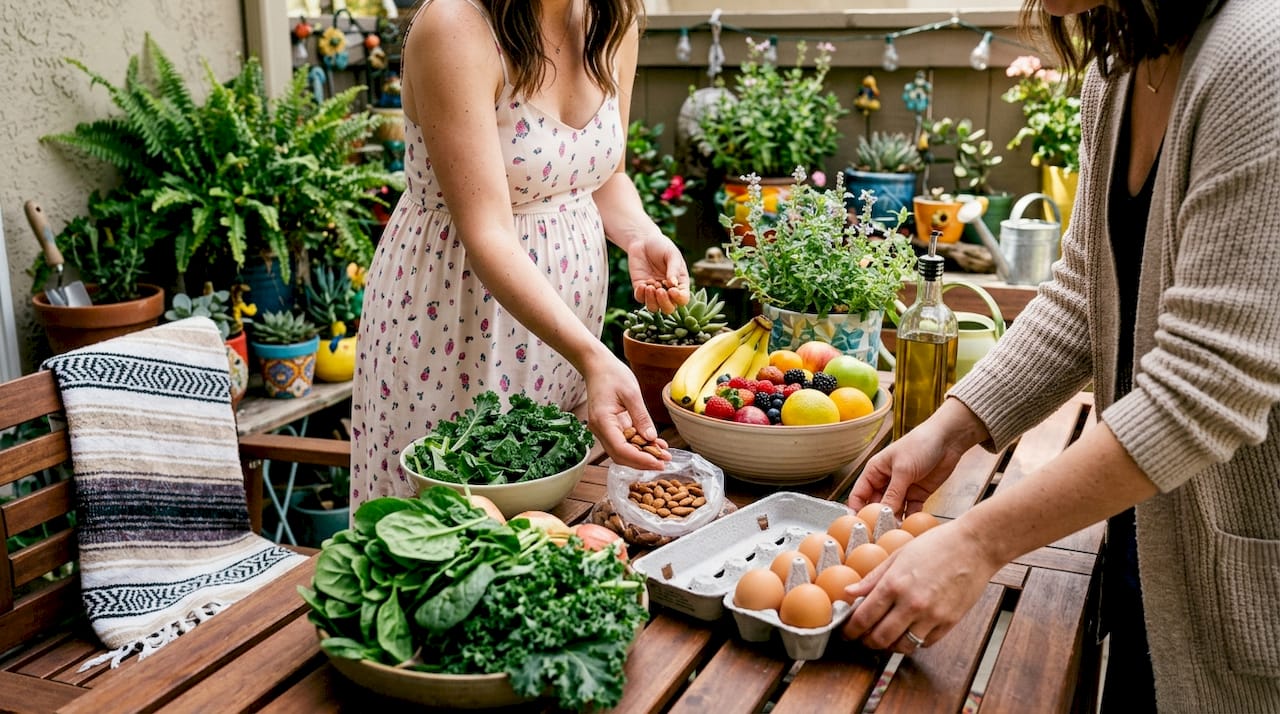
Daily folic acid intake of 400–800 mcg is recommended to reduce neural tube defects, and many foods alone cannot deliver enough. A prenatal supplement covers the gap, but your grocery list should still include folate-rich foods like spinach, lentils, and fortified cereals. These foods also deliver fiber, iron, and other micronutrients that no pill can fully replicate.
Pregnant mothers should consume 8–12 ounces of low-mercury seafood weekly for omega-3 fatty acids that support brain development. Salmon, sardines, and shrimp are all safe, low-mercury choices. Avoid swordfish, king mackerel, and tilefish entirely.
Here is a core grocery checklist based on current nutritional guidance:
Produce
- Spinach, kale, and romaine lettuce (folate, iron)
- Avocados (healthy fats, potassium)
- Sweet potatoes (vitamin A, fiber)
- Bananas and oranges (vitamin B6, vitamin C)
- Berries (antioxidants, fiber)
Protein
- Eggs (choline, protein)
- Canned salmon or sardines (omega-3s, calcium)
- Chicken breast and lean ground beef (iron, protein)
- Lentils and black beans (folate, plant-based protein)
- Greek yogurt (calcium, probiotics)
Grains and Carbohydrates
- Whole-grain bread and oats (complex carbs, B vitamins)
- Brown rice and quinoa (fiber, magnesium)
- Fortified cereals (folic acid, iron)
Dairy and Fats
- Whole milk or fortified plant milk (calcium, vitamin D)
- Cheese (calcium, protein)
- Walnuts and almonds (healthy fats, magnesium)
Pro Tip: Add a small bag of almonds and a piece of fruit to your cart every week. This combination covers healthy fats, fiber, and natural sugar in one portable snack that works at any hour.
How does each trimester change what you need to buy?
Your grocery list for expecting moms should shift with each trimester. Nutritional needs, food tolerances, and appetite all change significantly across nine months.
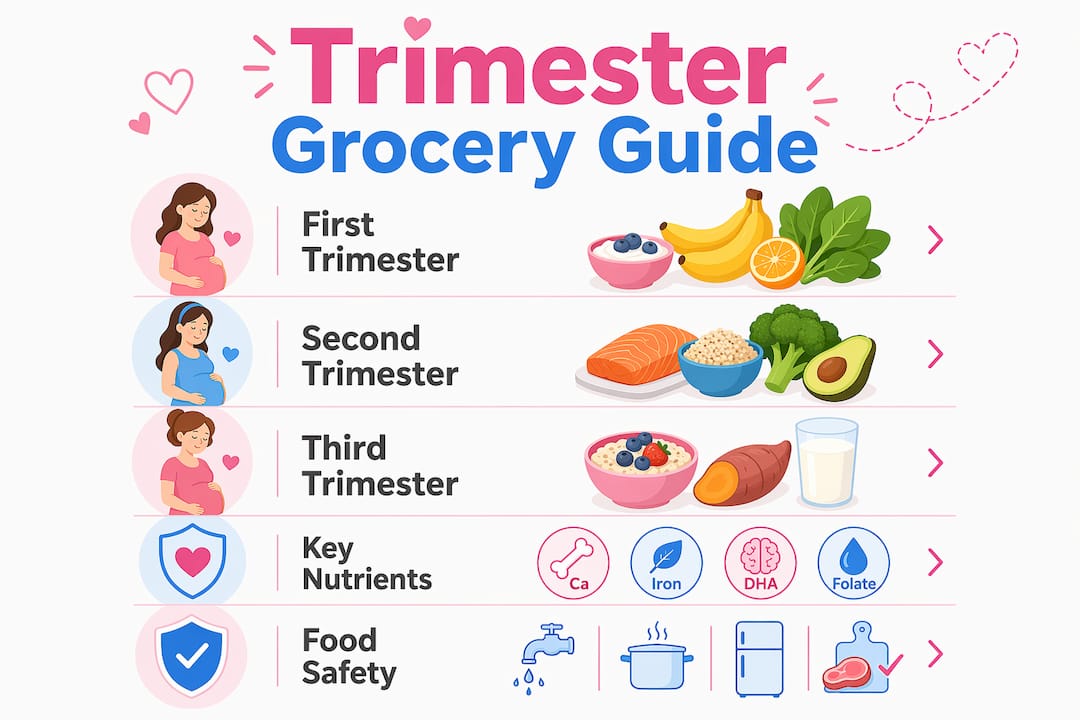
First trimester: survival mode shopping
The first trimester is often about tolerating food rather than perfecting it. Nausea, food aversions, and fatigue make eating a challenge for most mothers. Surviving nausea with simple carbs like bagels, dry cereal, or plain crackers is a real success during this phase. Comfort and consistency outweigh nutritional perfection when your body is struggling to keep anything down.
Cold, bland, low-odor foods like smoothies, crackers, and cold pasta salads are more tolerable during early pregnancy. Sensory sensitivities make hot, strongly scented foods feel unbearable. Stock your fridge with cold options you can grab quickly without cooking.
Second and third trimester: building up nutrients
By the second trimester, appetite usually returns and nutritional demands increase. Your baby is growing rapidly, and your body needs more iron, calcium, and protein to keep up. Add more leafy greens, dairy, and lean meats to your cart. The third trimester calls for even more calcium and omega-3s to support bone development and brain growth.
Here is a trimester-by-trimester shopping adjustment plan:
- First trimester: Stock bland, cold, easy-to-eat foods. Crackers, plain rice, cold fruit, ginger tea, and fortified cereals. Focus on folate and vitamin B6.
- Second trimester: Reintroduce a wider variety. Add more protein sources, leafy greens, dairy, and whole grains. Increase iron-rich foods like lentils and lean beef.
- Third trimester: Prioritize calcium, omega-3s, and fiber. Add salmon, sardines, fortified milk, and high-fiber vegetables. Prepare easy, grab-and-go snacks for late-stage fatigue.
Pro Tip: Keep a small container of crackers or dry cereal on your nightstand. The 15-minute window rule means eating a bland snack within 15 minutes of waking prevents the blood sugar crash that triggers morning sickness.
What food safety rules belong on your pregnancy grocery checklist?
Food safety is a non-negotiable part of any pregnancy diet checklist. Your immune system is suppressed during pregnancy, which makes you more vulnerable to bacteria like Listeria and Salmonella. These infections can cause serious complications for your baby.
Reheating deli meats and leftovers to 75°C (167°F) eliminates Listeria risk. Many mothers choose to avoid deli meats entirely to reduce the mental load of tracking temperatures. That is a perfectly reasonable choice.
Safety note: Avoid raw or undercooked fish, unpasteurized cheeses, raw sprouts, and unwashed produce during pregnancy. These foods carry bacteria and parasites that pose real risks to fetal health.
Foods to avoid or handle carefully:
- Deli meats and hot dogs: Reheat to steaming hot before eating
- Raw fish and sushi: Avoid entirely during pregnancy
- High-mercury fish: Swordfish, king mackerel, shark, and tilefish
- Unpasteurized dairy: Soft cheeses like brie, camembert, and queso fresco unless labeled pasteurized
- Raw sprouts: Alfalfa, clover, and radish sprouts carry bacterial risk
- Unwashed produce: Always rinse fruits and vegetables thoroughly
Prenatal supplements fill nutritional gaps but cannot replace fiber, micronutrients, and hydration from a varied, whole-food diet. Think of your supplement as a safety net, not a substitute. Your grocery list still needs to deliver the real nutrition.
How do you plan and organize your pregnancy grocery shopping?
A practical shopping plan saves time, reduces stress, and keeps your nutrition on track even on difficult days. First-time mothers often underestimate how much planning ahead matters when fatigue and nausea hit.
| Shopping tool | Why it helps |
|---|---|
| Pre-written grocery list | Prevents impulse buys and forgotten staples |
| Insulated bag | Keeps cold foods safe during the trip home |
| Phone reminder app | Alerts you to restock key items before they run out |
| Meal prep containers | Makes batch cooking and portioning easier |
| Small snack bag | Keeps healthy snacks for pregnancy on hand during shopping |
A step-by-step approach to organizing your weekly shop:
- Plan your meals for the week. Write out five to seven dinners and identify the ingredients you need. This prevents multiple trips and reduces decision fatigue.
- Build your list by store section. Group produce, proteins, dairy, and grains together. This speeds up shopping and reduces time on your feet.
- Check your pantry first. Avoid buying duplicates of staples like oats, canned beans, or olive oil.
- Schedule shopping for your best time of day. Many mothers feel best mid-morning, after nausea settles. Avoid shopping when you are hungry or tired.
- Prepare easy snacks before you go. Eat something before leaving. Shopping on an empty stomach leads to poor choices and discomfort.
Healthy snacks for pregnancy that belong on every list include string cheese, apple slices with almond butter, trail mix with nuts and dried fruit, hummus with whole-grain crackers, and hard-boiled eggs. These options deliver protein, fiber, and healthy fats in small portions that are easy to eat between meals.
Pro Tip: Set a weekly phone reminder for sunday evening to review your meal plan and write your grocery list. Mothers who plan ahead report fewer last-minute fast food runs and more consistent nutrient intake.
Key Takeaways
A well-organized pregnancy grocery shopping list built around folate, iron, protein, and healthy fats is the single most effective tool for supporting fetal development and managing pregnancy symptoms.
| Point | Details |
|---|---|
| Core nutrients come first | Build your list around folate, iron, vitamin B6, protein, healthy fats, and complex carbs. |
| Adjust by trimester | First trimester calls for bland, tolerable foods; later trimesters need more iron, calcium, and omega-3s. |
| Food safety is non-negotiable | Reheat deli meats to 75°C (167°F) and avoid raw fish, unpasteurized dairy, and high-mercury seafood. |
| Supplements support, not replace | Prenatal vitamins fill gaps but cannot substitute for a varied, whole-food diet. |
| Plan and prep weekly | A written meal plan and organized shopping list reduce stress and improve nutritional consistency. |
What I have learned from helping mothers build their grocery lists
At Boy or Girl, we have worked with thousands of first-time mothers navigating the very real challenge of eating well during pregnancy. The most common mistake we see is trying to eat perfectly from day one. That pressure backfires fast, especially in the first trimester when your body is fighting nausea and exhaustion.
The mothers who do best are the ones who stay flexible. They keep a short, reliable list of foods they can always tolerate and build from there. They do not abandon their nutrition goals when cravings hit. They adapt. A bowl of cereal at midnight is not a failure. It is a win if it keeps you nourished.
The other thing we see consistently is that food safety anxiety causes real stress. You do not need to memorize every rule. Focus on three things: avoid raw fish, reheat deli meats, and wash your produce. That covers the vast majority of risk without turning every meal into a checklist exercise.
Pregnancy nutrition is not about perfection. It is about consistency, flexibility, and giving your body what it needs most days. You are doing better than you think.
Personalized pregnancy support from Boy or Girl
Building a grocery list is a great first step. Getting personalized guidance makes it even more effective.

Boy or Girl offers tailored diet plans and expert consultations designed specifically for expectant mothers. Whether you are managing nausea in the first trimester or building a nutrient-dense meal plan for the third, the platform connects you with resources and a supportive community that understands what you are going through. You do not have to figure this out alone. Visit Boy or Girl to access pregnancy nutrition tools, personalized guidance, and a community of mothers who have been right where you are.
FAQ
What foods should always be on a pregnancy grocery list?
Leafy greens, eggs, low-mercury fish, whole grains, legumes, dairy, and fresh fruit cover the core nutrients every pregnant mother needs. These foods deliver folate, iron, calcium, protein, and omega-3 fatty acids in natural, bioavailable forms.
How often should pregnant mothers eat during the day?
Eating every 2–3 hours steadies blood sugar and reduces nausea, especially in the first trimester. Small, frequent meals work better than three large ones for most expectant mothers.
Is it safe to eat deli meat during pregnancy?
Deli meat is safe only when reheated to steaming hot, approximately 75°C (167°F), to eliminate Listeria bacteria. Many mothers choose to avoid it entirely to reduce risk and simplify food safety decisions.
Do prenatal vitamins replace the need for a healthy diet?
Prenatal vitamins fill specific nutritional gaps but cannot replace fiber, hydration, and the full range of micronutrients found in whole foods. A varied diet remains the foundation of healthy pregnancy nutrition.
What are the best healthy snacks for pregnancy?
String cheese, hard-boiled eggs, apple slices with almond butter, hummus with whole-grain crackers, and trail mix with nuts and dried fruit all deliver protein, fiber, and healthy fats in easy, portable portions.
Visita nuestras redes sociales
Best SheBirth.com Alternatives for Pregnancy Support

Pregnancy Partner Support Tips and Examples That Work

Amniocentesis Gender Detection: Accuracy, Risks, and What to Expect

How to Download Pregnancy Platform Progress Reports

Why Pregnancy Trimesters Are Divided: A Clear Medical Guide

Pregnancy Budget Planning Checklist for Expectant Parents