

Amniocentesis Gender Detection: Accuracy, Risks, and What to Expect

What is amniocentesis gender detection?
Índice
- What is amniocentesis gender detection?
- How does amniocentesis work, and what conditions does it detect?
- What are the risks and safety considerations of amniocentesis?
- What should you expect during and after the procedure?
- How are amniocentesis results interpreted for gender and genetic conditions?
- Support and resources for expectant mothers facing amniocentesis
- When is amniocentesis medically indicated specifically for gender detection?
- How does amniocentesis compare to other methods of fetal gender detection?
- Ethical considerations and decision-making around gender detection
- Key Takeaways
- Recommended
Amniocentesis is a prenatal diagnostic test that can determine fetal sex with approximately 99.4% accuracy by analyzing chromosomes from amniotic fluid. A thin needle is inserted through the abdomen into the uterus, drawing out a small sample of fluid that contains fetal cells. Those cells are then examined in a lab for chromosomal patterns, including the XX (female) or XY (male) combination that reveals biological sex.
That said, gender detection is never the primary reason for recommending this test. Amniocentesis is a medical procedure with real risks, and healthcare providers reserve it for situations where genetic or chromosomal information is medically necessary.
Here is what amniocentesis can tell you at a glance:
- Fetal sex: Identified through chromosomal analysis with very high accuracy
- Chromosomal abnormalities: Including Down syndrome (trisomy 21), Edwards syndrome, and Patau syndrome
- Genetic disorders: Such as cystic fibrosis, sickle cell disease, and Tay-Sachs disease
- Neural tube defects: Including spina bifida and anencephaly
- Sex-linked conditions: Such as Duchenne muscular dystrophy and hemophilia, which primarily affect males
- Infections: Certain fetal infections detectable through amniotic fluid analysis
Gender determination through amniocentesis is largely incidental to testing for sex-linked genetic diseases. Knowing the sex helps providers assess the risk for conditions that affect one sex far more than the other.
How does amniocentesis work, and what conditions does it detect?
The procedure is performed between weeks 15 and 20 of pregnancy as an outpatient visit. Timing matters because the amniotic fluid volume is sufficient by week 15, and earlier testing carries higher risk.
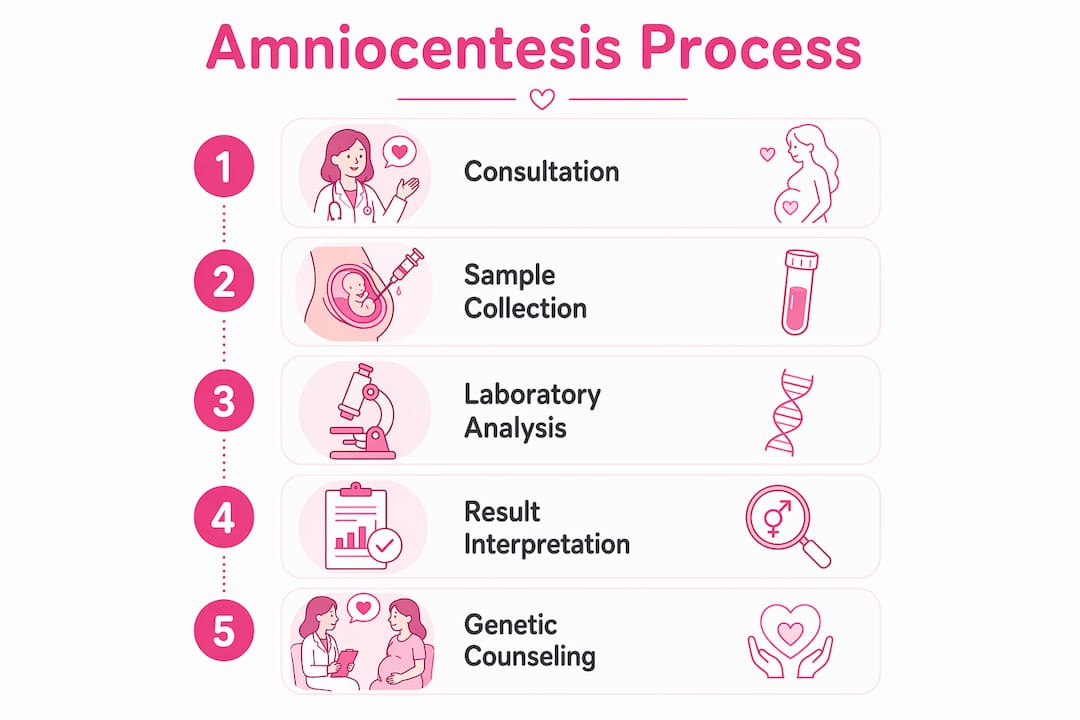
Here is what happens during the procedure and in the lab afterward:
- Ultrasound assessment: Before any needle is inserted, an ultrasound maps fetal position, fluid pockets, and placental location
- Fluid extraction: A needle draws out less than one ounce of amniotic fluid, which contains fetal cells shed naturally during development
- Karyotyping: Lab technicians culture the fetal cells and examine the full chromosomal picture
- DNA analysis: Molecular testing identifies single-gene conditions, including X-linked, recessive, and dominant disorders
- Neural tube defect screening: Elevated alpha-fetoprotein levels in the fluid can signal spina bifida or anencephaly
Amniocentesis was first used for sex determination by Fuchs and Riis in 1956, making it one of the oldest prenatal diagnostic tools still in clinical use. Today it remains the gold standard for definitive chromosomal diagnosis when a screening test raises concern.
What are the risks and safety considerations of amniocentesis?
Amniocentesis carries a small but real risk profile, which is why providers do not recommend it casually. Understanding these risks helps you weigh the decision carefully with your care team.
- Miscarriage: The risk is estimated between 1 in 300 and 1 in 900, making it relatively low but not negligible
- Infection: Bacteria can enter the uterus during needle insertion, though this is rare when performed with proper sterile technique
- Fetal injury: The needle could, in rare cases, contact the fetus, though continuous ultrasound guidance greatly reduces this risk
- Amniotic fluid leakage: A small amount of fluid may leak after the procedure, usually resolving on its own within a day or two
- Rh sensitization: If you have Rh-negative blood, your provider will administer Rh immunoglobulin after the procedure
Because of these risks, providers recommend amniocentesis only when there is a clear medical indication, such as advanced maternal age, an abnormal ultrasound finding, or a known family history of a genetic disorder. Choosing amniocentesis purely to learn the baby’s sex is not considered medically appropriate.
What should you expect during and after the procedure?
Most people find the procedure shorter and more manageable than they expected. Here is a step-by-step picture of what the appointment looks like:
- Pre-procedure ultrasound: Your provider checks fetal position, amniotic fluid volume, and the safest needle entry point
- Skin preparation: The abdomen is cleaned with povidone-iodine and sterile gel is applied for ultrasound guidance
- Needle insertion: A 20 to 22-gauge needle enters the uterus, typically in the upper third of the uterus to reduce discomfort
- Fluid collection: The needle stays in place for about 1–2 minutes while the fluid is drawn out
- Total appointment time: The full visit, including prep, ultrasound, and post-procedure monitoring, takes around 30 minutes
- Post-procedure monitoring: Your provider checks fetal heartbeat and your vital signs before you leave
- Recovery: Most people rest for the remainder of the day and avoid strenuous activity for 24 hours; cramping and light spotting are common but should resolve quickly
Pro Tip: Bring a support person to your appointment. Having someone with you helps during the wait and the drive home, especially if you feel crampy or anxious afterward.

How are amniocentesis results interpreted for gender and genetic conditions?
Results do not come back the same day. Because fetal cells must be cultured in a lab before analysis, turnaround time ranges from a few days to several weeks depending on the specific tests ordered.
- Gender identification: The lab looks for XX (female) or XY (male) chromosomes; this result is highly reliable at 99.4% accuracy
- Chromosomal results: Karyotyping reveals extra, missing, or rearranged chromosomes that signal conditions like Down syndrome
- Rapid FISH testing: Some labs offer a faster preliminary result within 24–48 hours for common chromosomal conditions, with full karyotype following
- Molecular results: Single-gene disorder results may take longer because they require targeted DNA sequencing
- What amniocentesis cannot detect: The test does not identify every birth defect; structural issues like cleft palate or most heart defects require ultrasound evaluation
Genetic counseling is a critical part of this process. A certified genetic counselor helps you understand what a positive or negative result actually means for your pregnancy and your family, and they can walk you through your options without pressure.
Support and resources for expectant mothers facing amniocentesis
Deciding whether to have amniocentesis, and then waiting for results, can feel emotionally heavy. You do not have to navigate it alone.
- Genetic counselors: Board-certified genetic counselors can review your personal and family history before the test and explain results afterward
- Online communities: Forums and pregnancy support groups connect you with others who have been through the same experience
- Educational resources: Organizations like the American College of Obstetricians and Gynecologists (ACOG) publish patient-friendly guides on prenatal testing
- Informed consent conversations: Your provider should walk you through every risk and benefit before you agree to the procedure; asking questions is not just allowed, it is encouraged
- Mental health support: Many maternal-fetal medicine practices offer counseling referrals for patients managing anxiety around high-risk testing
At Boy or Girl, you can connect with a supportive community of expectant parents and access expert resources designed to help you feel confident and cared for during every stage of your pregnancy. Explore the XY chromosomal method for additional gender prediction insights alongside your medical testing.
When is amniocentesis medically indicated specifically for gender detection?
Amniocentesis is not recommended as a standalone gender test. However, there are specific medical scenarios where knowing fetal sex is a direct part of the diagnostic picture.
The clearest indication is a family history of X-linked recessive disorders. Conditions like Duchenne muscular dystrophy and hemophilia A primarily affect males, so identifying a male fetus triggers further targeted testing. In these cases, gender detection is not curiosity; it is a clinical decision point that shapes the entire diagnostic plan.
A second scenario involves pregnancies where a parent carries a known sex-linked gene mutation confirmed through prior genetic testing. Knowing the fetal sex helps providers determine whether the fetus is at risk before ordering more specific molecular analysis. Advanced maternal age combined with abnormal screening results may also lead to amniocentesis, where chromosomal sex is reported as part of the full karyotype.
How does amniocentesis compare to other methods of fetal gender detection?
Several options exist for learning fetal sex during pregnancy, and they differ significantly in timing, accuracy, and risk.

Non-invasive prenatal testing (NIPT): A blood draw from the pregnant person analyzes cell-free fetal DNA circulating in maternal blood. NIPT can detect fetal sex as early as week 10 with high accuracy and carries no procedural risk to the pregnancy. It is now the most common first-line option for gender detection when paired with chromosomal screening.
Ultrasound: A standard anatomy scan around weeks 18–20 can visually identify fetal sex based on genital development. Accuracy depends on fetal position and the sonographer’s experience. Ultrasound carries no risk, but it cannot provide the chromosomal certainty that amniocentesis delivers.
Amniocentesis: Offers the highest diagnostic certainty of any method, but it is invasive and carries miscarriage risk. For most people who simply want to know the sex, NIPT or ultrasound is the appropriate choice. Amniocentesis is reserved for pregnancies where a definitive chromosomal diagnosis is medically necessary.
You can also learn about common prenatal screenings that fit into a broader pregnancy care plan.
Ethical considerations and decision-making around gender detection
The ethics of using amniocentesis for gender detection center on one core principle: the procedure’s risks should be proportionate to its medical benefit. Using an invasive diagnostic test solely to satisfy curiosity about sex is widely considered ethically inappropriate by medical organizations in the United States, including ACOG.
Sex-selective termination based on amniocentesis results is a separate and serious concern. Several countries have restricted disclosure of fetal sex from amniocentesis for this reason, though in the United States, providers are generally required to share results with patients who request them.
For you as an expectant parent, the most grounded approach is to treat gender information as one part of a larger diagnostic picture, not the reason for the test. If you are considering amniocentesis, talk openly with your provider about your motivations, your risk factors, and what you plan to do with the results. That conversation is the foundation of truly informed consent.
Key Takeaways
Amniocentesis provides very high accuracy for fetal gender detection, but it is a medically indicated diagnostic procedure, not a gender reveal tool, and its risks require clear clinical justification before use.
Visita nuestras redes sociales
| Point | Details |
|---|---|
| Accuracy for gender detection | Amniocentesis identifies fetal sex via chromosomes at approximately 99.4% accuracy. |
| Procedure timing and duration | Performed between weeks 15 and 20; the full appointment takes around 30 minutes. |
| Miscarriage risk | Risk is estimated between 1 in 300 and 1 in 900, so medical indication is required. |
| Results turnaround | Fetal cells must be cultured first; results take from a few days to several weeks. |
| Gender detection is incidental | Fetal sex is identified as part of broader chromosomal analysis, not as a standalone test. |
Recommended
- Why Maternal Instinct Gender Prediction Works - boyorgirl.blog
- Boy or Girl - Tu app para el Embarazo - Common Tests and Screenings After Pregnancy Confirmation
- The Role of AI in Pregnancy Monitoring: 2026 Guide - boyorgirl.blog
- Boy or Girl - Tu app para el Embarazo - XY Method - Chromosomal Prediction
How to Download Pregnancy Platform Progress Reports

Why Pregnancy Trimesters Are Divided: A Clear Medical Guide

Pregnancy Budget Planning Checklist for Expectant Parents

What Is a Pregnancy Coaching Platform? Your Guide

Male Partner Role in Pregnancy Community: 2026 Guide

Track Pregnancy Milestones With a Platform Dashboard