

Pregnancy Nesting Instinct Explained for First-Time Moms

Índice
- What is the pregnancy nesting instinct and when does it start?
- What biological factors drive nesting behavior in pregnant women?
- How does nesting benefit emotional well-being and maternal bonding?
- What practical activities make nesting count?
- Key Takeaways
- Nesting taught me something no book prepared me for
- How Boy or Girl supports you through the nesting phase
- FAQ
- Recommended
The pregnancy nesting instinct is defined as the strong, often sudden urge expectant mothers feel to clean, organize, and prepare their home before their baby arrives. This drive is not just psychological. Research confirms it has a clear hormonal and neurological basis, making it one of the most well-documented pregnancy preparation instincts in maternal health. Over 70% of expectant mothers report experiencing it. That number tells you this is a normal, shared part of pregnancy, not a quirk or a sign of anxiety. Understanding the pregnancy nesting instinct explained through both science and lived experience helps you channel it wisely, protect your energy, and feel genuinely ready for your baby.
What is the pregnancy nesting instinct and when does it start?
The nesting instinct, clinically referred to as prenatal nesting behavior, is the biologically driven urge to create a safe, clean, and organized environment for a newborn. Most expectant mothers describe it as a burst of focused energy directed at their home. It feels purposeful and urgent, often arriving without warning.
Nesting typically begins as early as five months into pregnancy but most commonly intensifies during the third trimester. The timing varies widely between individuals. Some mothers feel the urge at week 20, while others notice it only in the final weeks before labor.
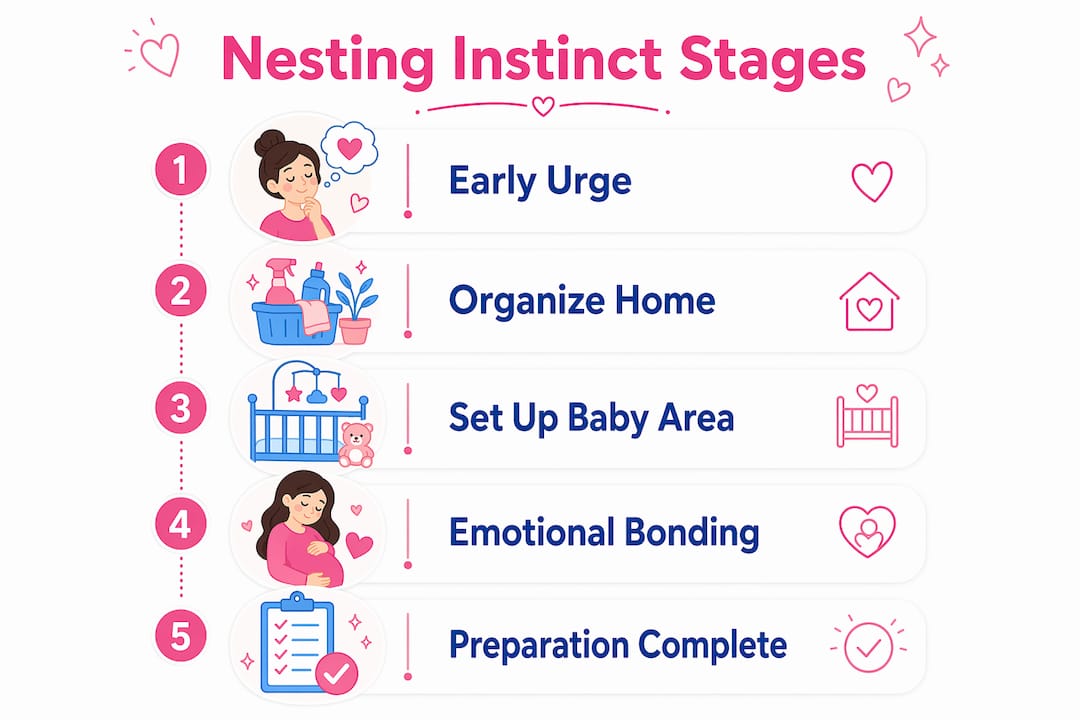
Here is what the nesting phase looks like in practice:
- Sudden motivation to deep clean rooms that felt fine before
- Reorganizing closets, drawers, and kitchen cabinets
- Setting up the nursery with specific attention to detail
- Pre-washing baby clothes and arranging them by size
- Stocking up on household supplies and baby essentials
- Meal prepping and freezing food for the postpartum period
The nesting phase can last days, weeks, or right up until labor begins. Some mothers experience it in waves rather than one continuous stretch. Knowing this helps you plan around it rather than push through exhaustion trying to finish everything at once.
What biological factors drive nesting behavior in pregnant women?
Nesting behavior in pregnant women is driven by measurable hormonal and neurological changes, not willpower or personality. This distinction matters because it validates the experience as real and physical, not imagined.

Oxytocin and estrogen levels rise sharply in the third trimester, directly promoting caregiving behaviors and the urge to prepare a safe space. Oxytocin, often called the bonding hormone, does not just activate during labor. It builds steadily throughout late pregnancy, priming the brain for nurturing.
A 2022 study on gray matter brain changes found that structural shifts in the brain during pregnancy predict how intense nesting behavior becomes in the third trimester. This means your brain is physically reorganizing to prioritize your baby’s safety. Neuroscientists describe this shift as a move away from individual performance toward caregiving anticipation.
The key biological drivers of nesting include:
- Oxytocin surge: Promotes bonding and the urge to create a nurturing environment
- Estrogen increase: Boosts energy levels and sharpens focus on preparation tasks
- Gray matter restructuring: Redirects cognitive priorities toward infant care
- Evolutionary function: Nesting mirrors protective behaviors seen across mammalian species
From an evolutionary standpoint, nesting is adaptive. A prepared, organized environment genuinely improves early newborn survival and reduces postpartum stress. Your body knows this before your conscious mind catches up.
Pro Tip: Track your baby’s weekly development alongside your nesting urges. Many mothers notice nesting energy spikes align with key developmental milestones in the third trimester.
How does nesting benefit emotional well-being and maternal bonding?
Nesting is not just about a clean house. Nesting behaviors actively decrease anxiety and increase maternal bonding by creating a calm, safe environment for the newborn. The act of preparation itself is therapeutic.
When you organize a feeding station or fold tiny onesies, you are doing something concrete in a period full of unknowns. That sense of control reduces the ambient anxiety that many first-time mothers carry through the final weeks of pregnancy. The physical act of preparing translates into emotional readiness.
Midwives emphasize nesting as a functional, bonding-promoting behavior rather than a mere psychological quirk. Preparing your baby’s space is one of the earliest forms of parenting. It builds the emotional connection before your child is even born.
Emotional nesting during pregnancy also includes less visible activities. Writing birth plans, researching pediatricians, and organizing support networks are all forms of nesting. They share the same psychological function: reducing uncertainty and building confidence.
Labeling the nesting urge consciously helps reduce anxiety and keeps preparation purposeful rather than frantic. When you recognize “this is nesting energy,” you can direct it intentionally instead of reacting to it. That awareness is the difference between productive preparation and exhausting compulsiveness.
Pro Tip: When nesting energy feels overwhelming, pause and use a simple grounding ritual. Stand still, touch your belly, and take three slow breaths. This separates productive nesting from anxiety-driven cleaning loops.
What practical activities make nesting count?
Effective nesting focuses on creating functional systems, not achieving perfection. The goal is a home that works for you in the exhausted, sleep-deprived early weeks after birth.
Organizing care stations such as a dedicated feeding area and a fully stocked diapering station saves far more time postpartum than scrubbing baseboards. Think in terms of systems, not aesthetics.
Here is a practical nesting priority list:
- Set up the sleep space. Install the crib or bassinet, wash all bedding, and confirm safe sleep guidelines are met.
- Build a feeding station. Stock nursing supplies, burp cloths, and a water bottle for yourself within arm’s reach.
- Organize the diapering area. Keep diapers, wipes, creams, and a change of clothes in one accessible spot.
- Pre-wash baby clothes. Use fragrance-free detergent and sort by size so you are not searching at 3:00 AM.
- Prep the kitchen. Batch cook and freeze meals for the first two weeks postpartum.
- Create a comfort corner. Set up a chair or space where you can feed, rest, and recover comfortably.
The table below shows which nesting tasks deliver the highest return on your time and energy:
| Nesting Task | Why It Matters |
|---|---|
| Feeding station setup | Reduces nighttime searching and supports breastfeeding success |
| Diapering station | Speeds up changes and keeps essentials within reach |
| Freezer meal prep | Removes cooking pressure during early postpartum recovery |
| Pre-washed baby clothes | Prevents skin irritation and saves time after birth |
| Nursery sleep space | Supports safe sleep from day one |
Nesting energy can arrive in irregular bursts, including sudden early morning surges that can confuse or frustrate partners. Communicating these urges clearly prevents household tension and turns nesting into a shared experience. Ask your partner to take on specific tasks so the workload stays balanced and safe.
One firm safety rule: avoid heavy lifting, climbing ladders, or using harsh chemical cleaners during pregnancy. Delegate those tasks. Your job is to direct, not to do everything yourself.
Key Takeaways
The pregnancy nesting instinct is a hormonally driven, neurologically confirmed behavior that prepares both your home and your mind for your baby’s arrival.
| Point | Details |
|---|---|
| Nesting is biological | Oxytocin and estrogen surges, plus gray matter brain changes, drive the urge to prepare. |
| Timing varies widely | Nesting can start at five months but most commonly peaks in the third trimester. |
| Emotional benefits are real | Purposeful preparation reduces anxiety and builds maternal bonding before birth. |
| Focus on functional systems | Care stations for feeding and diapering matter more than deep cleaning. |
| Partner communication helps | Sharing nesting energy surges with your partner prevents tension and spreads the workload. |
Nesting taught me something no book prepared me for
At Boy or Girl, we have supported thousands of expectant mothers through every stage of pregnancy, and nesting is the one experience that surprises first-time mothers most. Not because it is strange, but because it is so much more purposeful than they expected.
Most mothers come in thinking nesting means an uncontrollable urge to scrub floors. What they actually describe is something closer to clarity. A sudden, focused sense of what needs to happen before their baby arrives. That is not anxiety. That is preparation intelligence, and it deserves respect.
What I have seen consistently is that mothers who lean into nesting with intention, rather than fighting it or surrendering to it completely, enter the postpartum period with noticeably less stress. They know where things are. They have food in the freezer. They have a feeding chair they actually like sitting in.
The mothers who struggle are usually the ones who either ignore the urge entirely or push it into compulsive overdrive. Both extremes cost energy you will need later. The middle path is to treat nesting like a project with a scope. Define what done looks like, involve your partner, and stop when the list is finished.
One thing I would tell every first-time mother: your nesting instinct is smarter than you think. Trust it, but give it a checklist.
How Boy or Girl supports you through the nesting phase
Pregnancy preparation goes beyond organizing a nursery. Boy or Girl offers week-by-week pregnancy guides, baby development insights, and personalized resources that help you understand exactly what is happening in your body and your baby’s development at every stage.

During the nesting phase, having reliable information at your fingertips makes every preparation decision easier. From understanding your baby’s growth at week 24 to exploring our XY Method for gender prediction, Boy or Girl gives you the tools to feel informed, supported, and ready. Our community of expectant mothers and expert resources means you never have to figure this out alone.
FAQ
What is the nesting instinct in pregnancy?
The nesting instinct is the strong urge expectant mothers feel to clean, organize, and prepare their home before their baby arrives. It is driven by hormonal changes, including oxytocin and estrogen surges, and is experienced by over 70% of expectant mothers.
When does nesting start during pregnancy?
Nesting can begin as early as five months into pregnancy but most commonly intensifies during the third trimester. The timing and duration vary between individuals and can last right up until labor.
Is nesting a sign that labor is near?
Nesting often intensifies in the final weeks before labor, but it is not a reliable predictor of imminent birth. It reflects hormonal and neurological changes that build throughout the third trimester rather than a single pre-labor signal.
How do I handle nesting urges without overexerting myself?
Focus on high-value tasks like setting up care stations and pre-washing baby clothes rather than exhaustive cleaning. Delegate heavy lifting to your partner, use grounding rituals when energy feels compulsive, and set a defined task list so you know when to stop.
Can nesting affect my emotional health?
Purposeful nesting reduces anxiety and strengthens maternal bonding by giving you a sense of control and readiness. Compulsive nesting can lead to exhaustion, so recognizing the difference between productive preparation and anxiety-driven behavior keeps the experience positive.
Visita nuestras redes sociales
Recommended
Why Maternal Instinct Gender Prediction Works

Pregnancy Announcement Timing Examples: A Real Guide

Why Mobile-First Design Suits Pregnancy Platforms

Pregnancy Milestone Celebrations: Build Your Community

What Is a Pregnancy Wellness Platform? Your Guide

Mood Tracker for Pregnancy: Your 2026 Emotional Wellness Guide