


The Role of AI in Pregnancy Monitoring: 2026 Guide

Índice
- How does AI improve the role of AI in pregnancy monitoring through ultrasound?
- How does AI predict serious pregnancy complications?
- What can AI chatbots and digital tools do for expectant mothers?
- What does the future of AI-assisted pregnancy monitoring look like?
- Key Takeaways
- My honest take on AI and pregnancy care
- Boy or Girl supports your pregnancy with personalized tools
- FAQ
- Recommended
Artificial intelligence in pregnancy monitoring is defined as the continuous collection and analysis of health data to detect risks, guide decisions, and personalize care for expectant mothers and their babies. AI systems pull from wearable devices, clinical lab results, and ultrasound imaging to build a real-time picture of maternal and fetal health. Research shows that integrating AI into a pregnancy platform is safe in 98.4% of cases and increases appropriate health-seeking behavior by 10.5%. That figure matters because it means AI does not just inform mothers. It actively changes how they act on that information. Boy or Girl recognizes this shift and builds its platform around the same principle: better information leads to healthier pregnancies.
How does AI improve the role of AI in pregnancy monitoring through ultrasound?
Fetal ultrasound is one of the most powerful tools in prenatal care, but its accuracy has always depended heavily on the skill of the technician performing the scan. Two sonographers examining the same image can reach different conclusions. That operator variability creates real risk, especially when detecting structural abnormalities early in pregnancy.
AI models trained on large, curated medical datasets are closing that gap. FetalCLIP, a visual-language AI model trained on over 210,000 fetal ultrasound images, improves accuracy in estimating gestational age and detecting congenital heart defects. That scale of training data gives the model exposure to far more anatomical variation than any single clinician will see in a career.
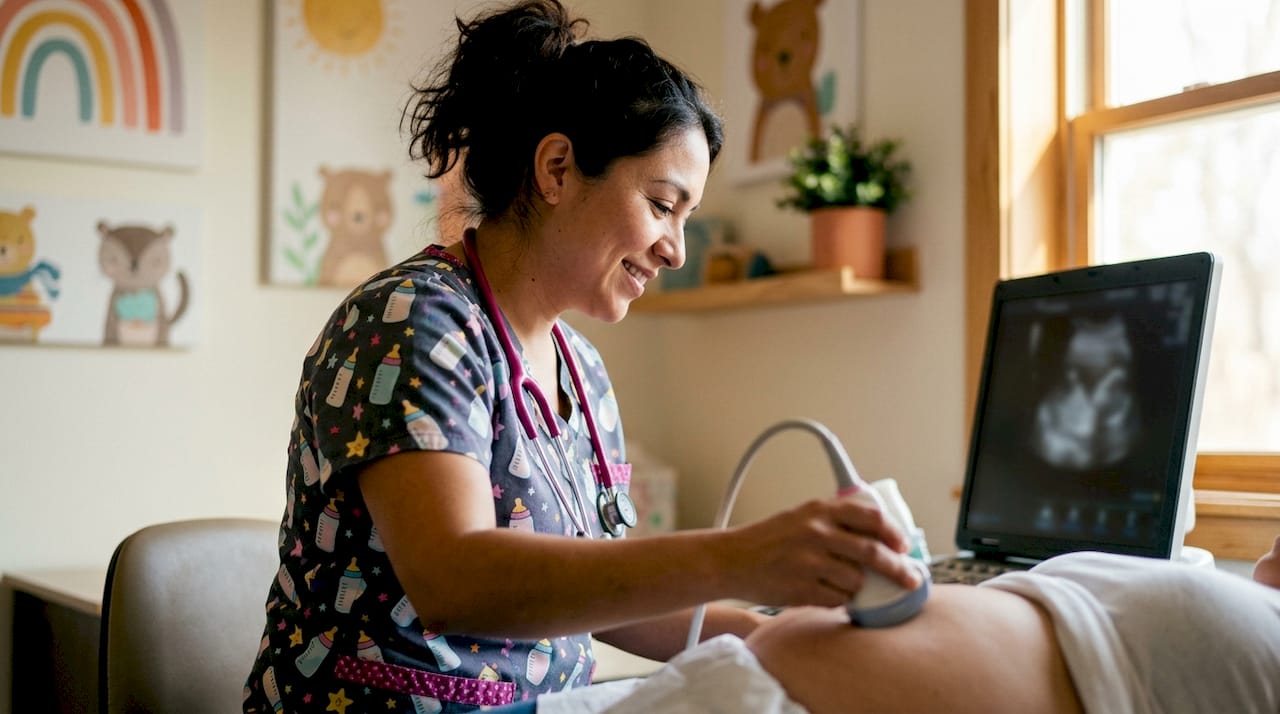
The practical result is more consistent readings across different clinical settings. A community health clinic using AI-assisted ultrasound can now produce results that approach the accuracy of a major academic medical center. That closes a real equity gap in prenatal care.
| Aspect | Traditional ultrasound | AI-assisted ultrasound |
|---|---|---|
| Gestational age accuracy | Operator dependent | Standardized by model training |
| Congenital defect detection | Variable by experience | Improved consistency across sites |
| Operator training required | Extensive | Reduced for routine measurements |
| Availability in lower-resource settings | Limited by expertise | Expandable with validated tools |
Pro Tip: Ask your provider whether their ultrasound facility uses AI-assisted image analysis. Knowing this helps you understand the confidence level behind your scan results and opens a productive conversation about what the images show.
You can also review what common prenatal screenings typically include so you arrive at each appointment informed and ready to ask the right questions.
How does AI predict serious pregnancy complications?
Preeclampsia, intrauterine growth restriction (IUGR), and preterm birth are among the most dangerous complications in pregnancy. They often develop silently, with few obvious symptoms until the condition is already advanced. Early prediction is the single most effective way to reduce harm to both mother and baby.
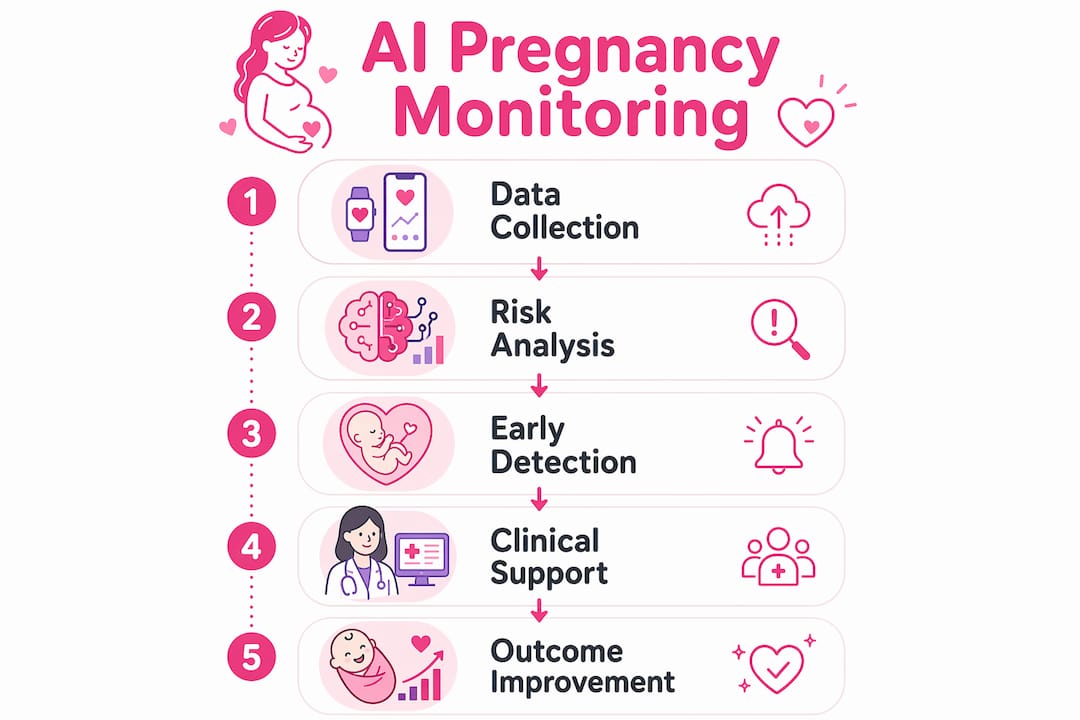
AI algorithms analyze clinical, demographic, and biomarker data to estimate a mother’s risk of developing preeclampsia and placental complications. Machine learning systems detect patterns across hundreds of variables simultaneously, something no clinician can do manually in a standard appointment. The result is a risk score that flags high-risk pregnancies weeks before symptoms appear.
The benefits of early prediction include:
- Earlier intervention: Physicians can prescribe low-dose aspirin or closer monitoring before complications escalate.
- Targeted testing: High-risk mothers receive more frequent blood pressure checks, urine protein tests, and growth scans.
- Reduced emergency admissions: Early management lowers the rate of crisis-level events like eclamptic seizures.
- Better birth planning: Providers and mothers can plan delivery timing and location based on predicted risk rather than reacting to emergencies.
- Reduced maternal anxiety: Knowing your risk level and having a plan reduces the fear of the unknown.
Most AI tools in pregnancy currently function as supplements to clinical care rather than replacements. Wide clinical adoption is still limited by regulatory and validation challenges. That context is worth holding onto: AI risk scores are decision-support tools, not diagnoses.
Pro Tip: If your provider shares an AI-generated risk score with you, ask what specific factors drove that score. Understanding the inputs, such as your blood pressure trend, body mass index, or prior pregnancy history, helps you take targeted steps rather than feeling generalized worry.
What can AI chatbots and digital tools do for expectant mothers?
AI chatbots in maternal health do more than answer questions. They provide appointment reminders, deliver personalized nutrition guidance, flag symptoms that warrant a call to a provider, and offer emotional reassurance at 2 a.m. when clinics are closed. For many expectant mothers, that round-the-clock availability fills a real gap between scheduled prenatal visits.
Cultural fit matters enormously in how effective these tools are. AI chatbots tailored to specific communities provide more effective maternal health education and reduce anxiety among pregnant women. A chatbot that speaks to a mother’s cultural context, uses familiar language, and reflects her community’s values builds trust far faster than a generic health information page. High-quality AI models use curated, vetted medical data to avoid the biases common in general datasets, which is critical for serving diverse pregnant populations equitably.
Assessing whether a chatbot or digital platform is genuinely useful for pregnancy support comes down to a few clear criteria:
- Medical accuracy: Is the content reviewed by licensed OB-GYNs or midwives? Look for named clinical advisors.
- Cultural adaptation: Does the tool reflect the language, values, and health beliefs of your community?
- Symptom triage: Can it distinguish between symptoms that need same-day care and those that can wait for a scheduled visit?
- Privacy standards: Does the platform explain clearly how your health data is stored and who can access it?
- Integration with your care team: Can the tool share summaries or alerts with your provider, or does it operate in isolation?
Good UX design in digital health tools directly affects whether expectant mothers actually use them consistently. A tool that is hard to navigate gets abandoned, no matter how medically sound its content is.
Connecting with other expectant mothers through platforms that include community features also strengthens the support these tools provide. Sharing experiences with other pregnant moms reduces isolation and gives real-world context to the information AI tools deliver.
What does the future of AI-assisted pregnancy monitoring look like?
The most significant development on the horizon is digital twin obstetrics. A digital twin is a continuously updated virtual model of a specific patient, built from real-time data streams. In pregnancy, that means combining wearable physiological monitoring, clinical lab values, imaging results, and molecular data into a single dynamic model that predicts complications before they occur.
Digital twin obstetrics integrates multimodal real-time data to create patient-specific models that update as the pregnancy progresses. The model does not just reflect where a mother is today. It projects where she is likely to be in two weeks, four weeks, or at delivery. That predictive horizon is what makes digital twins genuinely different from current AI tools.
The key capabilities and challenges of this approach include:
- Multimodal data integration: Combining wearables, imaging, genomics, and clinical records into one coherent model requires sophisticated data infrastructure.
- Personalized predictions: Unlike population-level risk scores, digital twins generate predictions specific to one mother’s physiology and history.
- Continuous updating: The model recalibrates as new data arrives, making it more accurate as pregnancy progresses.
- Interpretability challenges: Clinicians need to understand why the model is generating a specific prediction, not just what it predicts.
- Privacy and consent: Continuous data collection raises real questions about who owns that data and how it is protected.
- Clinical readiness: Most digital twin applications remain in research settings. Broad clinical use is still years away.
Future pregnancy monitoring will rely on multimodal AI that integrates wearable, imaging, and molecular data into these dynamic models. The technology is promising, but expectant mothers today should understand that their current prenatal care already benefits from earlier, more established AI applications in ultrasound and risk prediction.
Tracking your baby’s development week by week, such as understanding what is happening at week 21 of pregnancy, gives you a concrete framework for interpreting the monitoring data your care team shares with you.
Key Takeaways
AI in pregnancy monitoring works best as a clinical support tool that improves early detection, reduces diagnostic variability, and delivers personalized guidance to expectant mothers throughout their pregnancy.
| Point | Details |
|---|---|
| AI safety in pregnancy platforms | Integrated AI tools show a 98.4% safety rating and increase appropriate care-seeking by 10.5%. |
| Ultrasound accuracy | AI models like FetalCLIP, trained on 210,000+ images, reduce operator variability in fetal scans. |
| Complication prediction | Machine learning detects preeclampsia and IUGR risk early, enabling intervention before symptoms appear. |
| Chatbot effectiveness | Culturally adapted AI chatbots reduce anxiety and improve health education for diverse pregnant populations. |
| Digital twin obstetrics | Future AI will combine wearables, imaging, and molecular data into continuously updated pregnancy models. |
My honest take on AI and pregnancy care
At Boy or Girl, we have watched AI tools move from research papers into real clinical settings over the past few years. The progress is real. But the framing that concerns me most is when AI gets described as a replacement for your doctor, your midwife, or your own instincts about your body.
Medico-legal responsibility remains with clinicians, not algorithms. That is not a limitation of AI. It is a feature. It means a trained professional is always accountable for your care, and AI is there to give that professional better information faster. The distinction matters when you are the one receiving a risk score or a flagged ultrasound result.
What I find genuinely exciting is the cultural adaptation work happening in AI chatbots and maternal health platforms. For too long, digital health tools were built for a narrow demographic and then applied universally. Designing tools that reflect the language, values, and lived experience of diverse communities is not a nice-to-have. It is what determines whether a mother actually uses the tool and trusts what it tells her.
My advice: use AI tools actively, ask your provider about the AI systems they use, and bring the insights you gather into your appointments. You are not a passive recipient of AI-generated data. You are the most important person in your care team.
Boy or Girl supports your pregnancy with personalized tools
Pregnancy monitoring does not stop at the clinic door. Between appointments, you have questions, milestones to track, and decisions to make. Boy or Girl is built to support you through all of it.
The Boy or Girl XY Method combines chromosomal prediction with personalized pregnancy tracking, giving you a platform that goes beyond generic advice. You get tailored insights, expert-reviewed content, and a community of mothers who understand exactly what you are going through. Whether you want to understand your prenatal test results, track your baby’s development, or connect with others, Boy or Girl puts the right information in your hands at the right time. Your pregnancy deserves more than a one-size-fits-all app.
FAQ
What is the role of AI in pregnancy monitoring?
AI in pregnancy monitoring continuously collects and analyzes health data from devices, lab tests, and imaging to detect risks early and personalize care. Research shows AI-integrated platforms are safe in 98.4% of cases and meaningfully improve health-seeking behavior.
Can AI replace my OB-GYN during pregnancy?
AI cannot replace your OB-GYN. Medico-legal responsibility remains with clinicians, and AI functions as a support tool that improves the information available to your care team, not as a substitute for clinical judgment.
How does AI help detect preeclampsia early?
AI algorithms analyze clinical, demographic, and biomarker data simultaneously to estimate preeclampsia risk weeks before symptoms appear. Early detection allows physicians to begin preventive interventions like low-dose aspirin and closer monitoring.
Are AI pregnancy chatbots safe to use?
AI chatbots built on vetted medical datasets and reviewed by licensed clinicians are generally safe for health education and symptom guidance. Cultural adaptation and clear privacy policies are the two most important factors to check before using any maternal health chatbot.
What is digital twin obstetrics?
Digital twin obstetrics creates a continuously updated virtual model of a specific pregnancy by combining wearable data, imaging, lab results, and molecular information. The technology remains primarily in research settings but represents the most personalized form of prenatal monitoring currently in development.
Visita nuestras redes sociales
Recommended
Best SheBirth.com Alternatives for Pregnancy Support

Pregnancy Partner Support Tips and Examples That Work

Amniocentesis Gender Detection: Accuracy, Risks, and What to Expect

How to Download Pregnancy Platform Progress Reports

Why Pregnancy Trimesters Are Divided: A Clear Medical Guide

Pregnancy Budget Planning Checklist for Expectant Parents