


Why Pregnancy Affirmations Build Community and Connection

Índice
- Why pregnancy affirmations build community bonds
- What does research say about affirmations in prenatal groups?
- Which types of affirmations build the strongest communities?
- How can you use affirmations to build or strengthen your community?
- Key Takeaways
- What I have learned about affirmations and community at Boy or Girl
- Boy or Girl supports your affirmation practice and community
- FAQ
- Recommended
Pregnancy affirmations are defined as positive, repeated statements that expecting mothers use to reinforce confidence, calm anxiety, and strengthen emotional resilience during pregnancy. Research shows why pregnancy affirmations build community: they create shared emotional experiences that connect expecting mothers across prenatal classes, online forums, and support groups. A 2026 study confirmed that affirmations in online communities actively assist members in forming emotional bonds during identity shifts. At Boy or Girl, we see this play out every day. Affirmations are not just personal tools. They are the language of a community that holds each other up.
Why pregnancy affirmations build community bonds
Pregnancy triggers one of the most significant identity shifts a person can experience. Affirmations help expecting mothers affirm who they are and what they are capable of during that shift. When shared in group settings, those same statements become a form of mutual recognition. You are not just saying “I am strong.” You are telling the woman next to you, “We are strong.”
Pregnancy affirmations protect self-identity against the threat that comes with major life transitions. That protective function becomes even more powerful when practiced collectively. Shared affirmations create a common language inside prenatal groups, making it easier for expecting mothers to trust one another and open up about fears they might otherwise keep private.
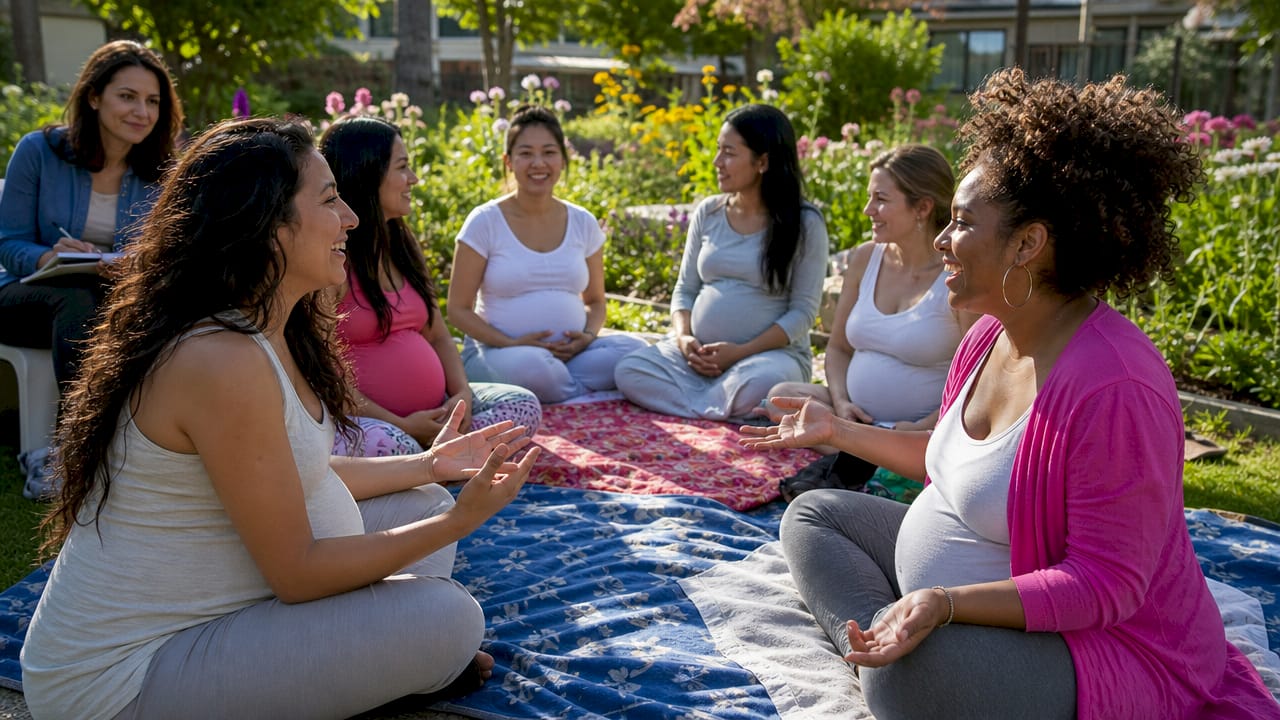
The neurological side of this matters too. Active affirmation practice builds stronger neural pathways than passive reading. Speaking affirmations aloud in a group setting reinforces both individual emotional resilience and the group’s collective sense of safety. That combination is what turns a room of strangers into a support network.
Here is what community-building through affirmations looks like in practice:
- Shared language: Group members use the same affirmations, which creates a sense of belonging and reduces feelings of isolation.
- Emotional validation: Hearing another expecting mother say “I trust my body” gives permission for others to feel the same way.
- Reduced shame: Affirmations normalize fear and uncertainty, making it safer to discuss difficult emotions openly.
- Consistent connection: Regular group affirmation practice gives members a reason to show up and stay engaged.
Pro Tip: If you are starting or joining a prenatal group, suggest opening each session with one shared affirmation. That single ritual builds familiarity faster than any icebreaker.
What does research say about affirmations in prenatal groups?
The evidence for community benefits of positive affirmations during pregnancy is specific and striking. A study using affirmation cards in perinatal care found that 74.1% of participants had antenatal anxiety before the program began. After using affirmation cards, 100% reported reduced fears and 95.8% felt supported during active labor. That is not a small effect. It shows that affirmations used within a care setting produce measurable emotional outcomes.
The physical outcomes are equally notable. Programs that incorporated affirmations alongside group support reported 64% fewer epidurals and 44% fewer cesarean sections, with the second stage of labor shortened by 32 minutes on average. These numbers reflect what happens when affirmations are embedded in a community of care rather than practiced in isolation.
“Affirmations shared in prenatal care create a culture of mutual reassurance and emotional safety.” — British Journal of Midwifery
The table below summarizes key research outcomes from affirmation programs used in group and prenatal settings.
| Outcome | Finding |
|---|---|
| Antenatal anxiety reduction | 100% of affirmation card users reported reduced fears |
| Labor support | 95.8% felt supported during active birth |
| Epidural reduction | 64% fewer epidurals in affirmation program groups |
| Cesarean reduction | 44% fewer cesarean sections |
| Labor duration | Second stage shortened by 32 minutes on average |
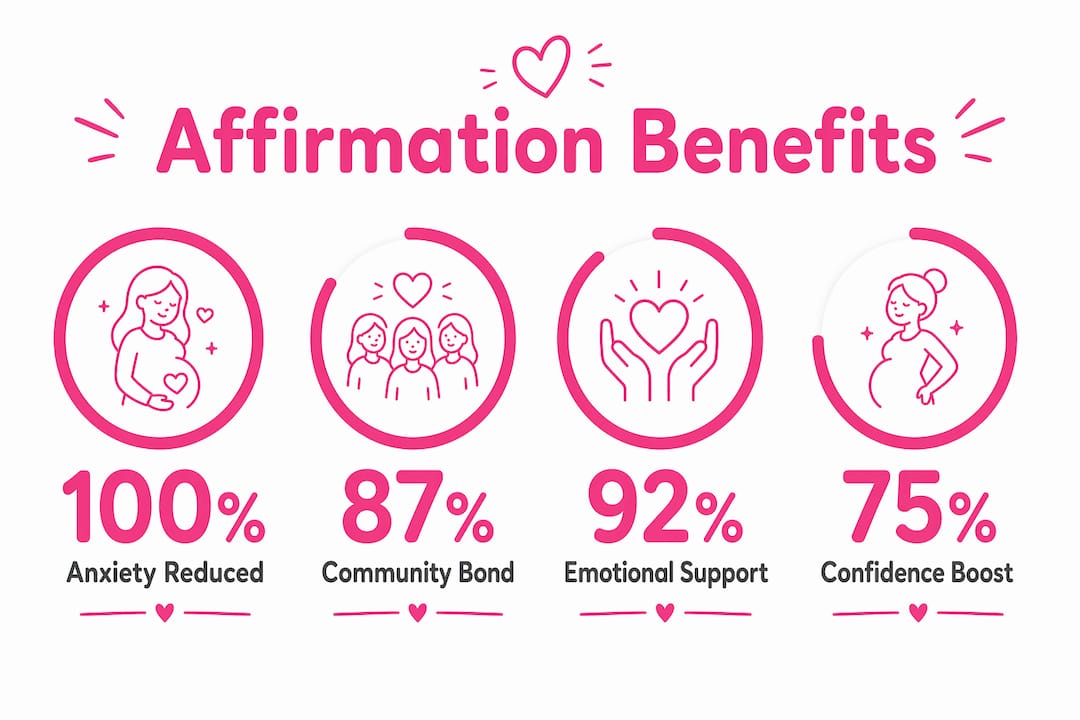
Online communities show the same pattern. A 2026 study confirmed that social support in online pregnancy groups frequently uses affirmations to connect members and provide emotional support during identity transitions. The digital format does not weaken the effect. Expecting mothers who share affirmations in forums and group chats report feeling less alone, more understood, and more prepared for birth.
Which types of affirmations build the strongest communities?
Not all affirmations produce the same community effect. Affirmations that focus on capability rather than perfection create deeper trust among group members. A statement like “I can do hard things” resonates because it is honest. It acknowledges difficulty while affirming strength. Forced positivity, such as “Everything will be perfect,” can actually alienate expecting mothers who are struggling. Authenticity is what makes a group feel safe.
Capacity-focused affirmations build stronger emotional resilience and community trust than statements that deny difficulty. This distinction matters especially in group settings, where one person’s discomfort with unrealistic positivity can shut down honest conversation for everyone.
Here are four practices that make affirmations more effective for community building:
- Write your own affirmations. Personal creation increases emotional investment. When group members share self-written affirmations, the exchange feels more genuine and builds deeper connection.
- Speak them aloud together. Saying affirmations as a group, rather than silently reading them, activates shared emotional experience and reinforces group identity.
- Revisit them regularly. Repetition over weeks and months deepens the neural and social impact. A group that returns to the same affirmations builds a shared history.
- Pair them with prenatal education. Affirmations work best as part of wider prenatal care that includes breathing techniques, childbirth education, and trusted social connections.
Pro Tip: Avoid affirmations that start with “I will never feel afraid.” Replace them with “I can face fear and keep going.” The second version builds real resilience. The first one sets up expecting mothers to feel like they have failed when fear arrives.
How can you use affirmations to build or strengthen your community?
Building support through pregnancy affirmations does not require a formal program. You can start with the people already around you. Here are practical ways to use affirmations for community building:
- Prenatal classes: Ask your instructor to open or close each session with a group affirmation. Even one shared statement per class creates a ritual that bonds participants.
- Online forums: Post a daily affirmation in a pregnancy group and invite others to respond with their own. The Boy or Girl forum is a great place to start this kind of exchange.
- Partner involvement: Sharing affirmations is a practical way for partners, friends, and family to express emotional care. Encourage the people close to you to offer affirmations as a form of support, not just practical help.
- Affirmation cards: Physical cards used in prenatal settings give midwives and care providers a low-cost tool for creating emotional safety. They also travel well, from a hospital bag to a group meeting.
- Meditation and breathing: Combining affirmations with breathwork deepens their calming effect and gives groups a shared physical practice to anchor the words.
- Open discussion: After practicing affirmations together, invite the group to share what came up. That conversation is where real community forms.
You can also connect with pregnant moms who are already using affirmations as part of their daily routine. Finding your people makes the practice stick.
Key Takeaways
Pregnancy affirmations build community because shared emotional practice creates trust, reduces isolation, and gives expecting mothers a common language for navigating one of life’s biggest transitions.
| Point | Details |
|---|---|
| Shared practice creates bonds | Group affirmation use builds trust and a common emotional language among expecting mothers. |
| Research confirms real outcomes | 95.8% of affirmation card users felt supported during labor; anxiety dropped across all participants. |
| Capacity-focused affirmations work best | Statements like “I can do hard things” build authentic connection better than forced positivity. |
| Active practice deepens impact | Speaking affirmations aloud in groups strengthens neural pathways and community ties simultaneously. |
| Integration amplifies results | Affirmations are most effective when paired with prenatal education, breathing, and social support. |
What I have learned about affirmations and community at Boy or Girl
Most articles treat pregnancy affirmations as a solo practice. A sticky note on the mirror. A quiet moment before bed. That framing misses the most powerful thing about them.
At Boy or Girl, we have watched expecting mothers use affirmations to break the silence around fear, grief, and uncertainty in ways that no other tool quite manages. When one mother in a group says “I trust my body,” and another nods because she needed to hear exactly that, something real happens between them. That moment is not individual wellness. It is community.
What I have also noticed is that authenticity is non-negotiable. Groups that use affirmations rooted in capability and honesty stay together longer and support each other more deeply than groups that default to relentless positivity. Expecting mothers can tell the difference between a statement that honors their reality and one that papers over it. The honest ones create safety. The forced ones create distance.
The research backs this up, but you do not need a study to feel it. Sit in a prenatal group where affirmations are practiced with care and you will see expecting mothers lean toward each other, not away. That lean is the whole point.
Affirmations also work best when they are woven into broader prenatal support, including women’s health screenings and care plans that address the full picture of pregnancy wellness. A single affirmation cannot replace a support network. But it can be the thing that starts one.
Boy or Girl supports your affirmation practice and community
At Boy or Girl, community is built into everything we offer. Our platform gives expecting mothers a space to share experiences, ask questions, and feel genuinely supported at every stage of pregnancy.

The XY Method at Boy or Girl combines personalized pregnancy tools with a community of expecting mothers who understand exactly what you are going through. Whether you want to share affirmations, find support during a tough week, or simply connect with someone who gets it, Boy or Girl is where that happens. You deserve a pregnancy experience that feels supported, not solitary.
FAQ
What are pregnancy affirmations?
Pregnancy affirmations are positive, repeated statements that expecting mothers use to build confidence and reduce anxiety during pregnancy. They work best when practiced actively, such as speaking them aloud or writing them daily.
How do affirmations help during pregnancy?
Affirmations reduce antenatal fear and anxiety while reinforcing emotional resilience. Research shows that 100% of affirmation card users reported reduced fears after using them in a perinatal care setting.
Why do affirmations build community among expecting mothers?
Affirmations create a shared emotional language that reduces isolation and builds trust in group settings. When practiced together, they give expecting mothers a common experience that deepens connection and mutual support.
What types of affirmations work best in group settings?
Capacity-focused affirmations, such as “I can do hard things,” work better in groups than overly optimistic statements. They honor real challenges and create the authenticity that genuine community requires.
Can partners use affirmations to support expecting mothers?
Yes. Sharing affirmations is a practical way for partners and loved ones to express emotional care. It builds communication and strengthens the support network around an expecting mother during pregnancy.
Visita nuestras redes sociales
Recommended
Best SheBirth.com Alternatives for Pregnancy Support

Pregnancy Partner Support Tips and Examples That Work

Amniocentesis Gender Detection: Accuracy, Risks, and What to Expect

How to Download Pregnancy Platform Progress Reports

Why Pregnancy Trimesters Are Divided: A Clear Medical Guide

Pregnancy Budget Planning Checklist for Expectant Parents