


What Is a Pregnancy Buddy System and Why It Matters

Índice
- What is a pregnancy buddy system and how does it work in practice?
- What benefits do pregnancy buddy systems offer to mothers and partners?
- How to find a pregnancy buddy system that works for you
- Common challenges and how to overcome them
- Key Takeaways
- Why I believe pregnancy buddy systems change everything
- Boy or Girl is here to support your pregnancy
- FAQ
- Recommended
A pregnancy buddy system is defined as a structured peer support network where expectant parents connect with other pregnant individuals, partners, or trained companions to share experiences, guidance, and emotional support throughout pregnancy. This community model goes well beyond casual friendship. It fills the gap between clinical prenatal appointments and the day-to-day reality of growing a baby, offering you consistent human connection when you need it most. Research and health organizations consistently link strong social support during pregnancy to better maternal mental health, reduced stress, and more positive birth experiences. If you are a first-time parent, building this network early is one of the most practical decisions you can make.
What is a pregnancy buddy system and how does it work in practice?
Pregnancy buddy systems take several forms, and knowing the structure helps you choose the right fit. The most studied model is group prenatal care, sometimes called “circle care.” These structured pregnancy circles bring together 8–12 pregnant individuals at similar gestational stages who live in the same area, combining standard clinical check-ups with facilitated group discussion. That dual format means you get your blood pressure checked and your questions answered in the same session, alongside people who truly understand what you are going through.
Sessions typically run 90 minutes to 2 hours. That extended time allows real conversation, not just a rushed appointment. Group prenatal sessions build friendships that last well beyond birth, creating a postpartum community that is already in place when you need it most.

State-sponsored programs add another layer. Indiana’s Pregnancy Promise Program, for example, provides dedicated case managers who support Medicaid-covered pregnant individuals through pregnancy and up to 12 months postpartum. That kind of consistent, professional coordination is a pregnancy buddy program at scale.
Beyond formal programs, buddy systems also appear as:
- One-on-one buddy pairs: Two pregnant women at similar stages check in regularly by text, phone, or in person.
- Online communities: Forums and social groups where expectant parents share questions, symptoms, and encouragement around the clock.
- Partner-centered systems: A co-parent or spouse takes on a defined support role, learning what to do and when.
- Hybrid models: A mix of a peer buddy, a professional doula, and an online group working together.
Pro Tip: Join or form your buddy group before the second trimester. The earlier you connect, the more trust you build before the harder weeks arrive.
What benefits do pregnancy buddy systems offer to mothers and partners?
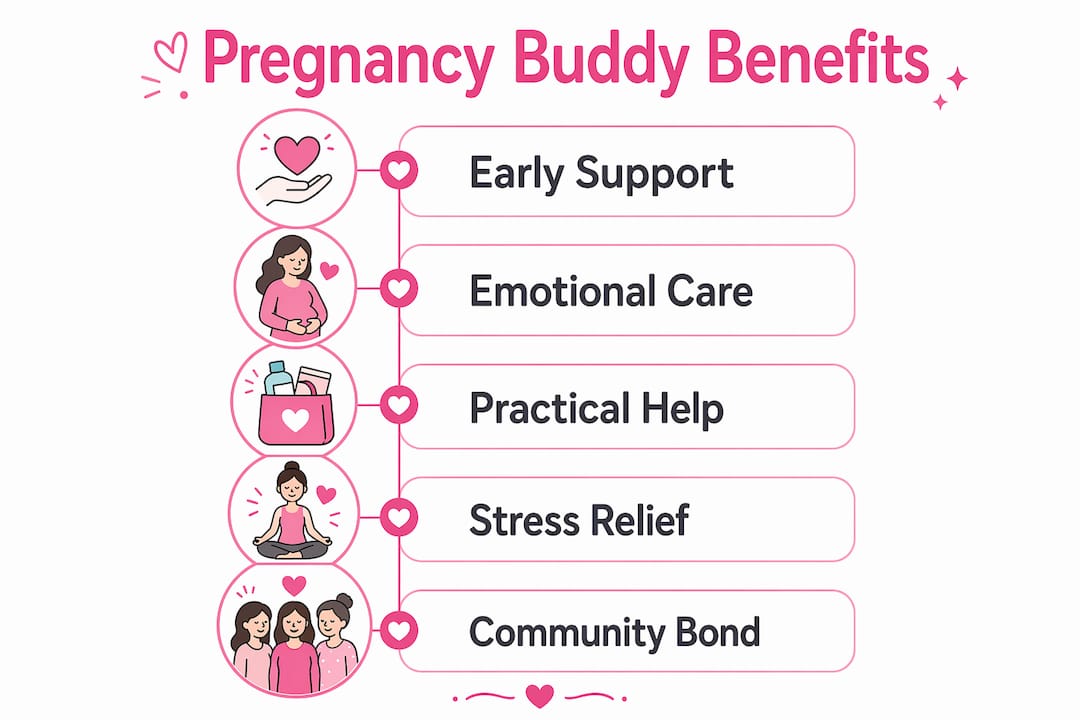
The benefits of pregnancy buddies reach further than most first-time parents expect. Peer learning within group prenatal care flattens clinical hierarchies, meaning you feel heard rather than processed. That shift matters enormously for marginalized communities who often report feeling dismissed in standard clinical settings.
Here are the core benefits, ranked by impact:
- Reduced isolation. Pregnancy can feel lonely, especially in the first trimester when you are not yet showing. A buddy gives you someone to call at 2 AM when anxiety spikes.
- Peer education. Hearing how another pregnant person handled heartburn, back pain, or a difficult scan result teaches you more than a pamphlet ever will.
- Empowerment. Group prenatal care empowers pregnant people to take agency over their health, improving engagement with their own care plans.
- Partner inclusion. Partners often feel excluded early in pregnancy. A buddy system that includes them gives partners a clear role and reduces their anxiety too.
- Practical help. Buddies and partners who manage cooking, shopping, and household tasks free the birthing parent to rest and focus on their health.
- Better postpartum outcomes. The friendships formed during pregnancy create a ready-made support network for the fourth trimester, when exhaustion peaks.
“Partners’ active involvement in pregnancy and newborn care strengthens family bonds and supports maternal mental health. Proactive participation in logistics is one of the most direct ways a partner can reduce stress for the birthing parent.”
The importance of pregnancy companionship is not sentimental. It is practical. Stress reduction during pregnancy has direct links to healthier birth weights and calmer postpartum recoveries. A buddy system is one of the most accessible tools you have.
How to find a pregnancy buddy system that works for you
Finding the right pregnancy support system starts with knowing where to look. You do not need a formal program to benefit. A single trusted connection, built intentionally, delivers real results.
Start with these approaches:
- Ask your OB or midwife. Many practices run or know of local group prenatal care programs. Your provider is the fastest path to a vetted, structured option.
- Search community health centers. Federally qualified health centers often host free or low-cost group prenatal care for underserved populations.
- Connect with other pregnant moms online. Platforms like the Boy or Girl forum give you access to a community of expectant parents sharing real experiences, questions, and support.
- Check state programs. If you are on Medicaid, programs like Indiana’s Pregnancy Promise Program may assign you a case manager at no cost.
- Use pregnancy apps. Digital tools offer personalized tracking, expert content, and community features that complement in-person support.
- Talk to your partner early. Define what support looks like. Assign specific tasks. Partners who know their role feel less helpless and more connected.
Building your support network during pregnancy is the right time. The postpartum period is often too exhausting for active socializing, making it the wrong moment to start building relationships from scratch.
A strong pregnancy support system is not one thing. It is a patchwork. Effective support combines friends, professionals, and community groups rather than relying on any single source. Think of it as assembling a team, not finding a single hero.
Pro Tip: Write down three specific things you need help with this week, then ask one person for each. Specific requests get real responses far more often than general calls for help.
Common challenges and how to overcome them
Pregnancy buddy systems work best when you anticipate the friction points. Every group or partnership faces them.
- Confidentiality concerns. In circle care, personal health details are shared in a group. Skilled facilitation is the solution. Effective pregnancy circles require trained facilitators who set clear ground rules about privacy from the first session.
- Unequal participation. Some members share freely; others stay quiet. A good facilitator draws out quieter voices and prevents one person from dominating.
- Partner disengagement. Partners who feel sidelined early often disengage entirely. Give them specific, manageable tasks from the start.
- Trying to do it alone. No single person can be your entire village. Relying on one buddy or one partner for everything leads to burnout on both sides.
- Knowing when peer support is not enough. A buddy system supplements professional care. It does not replace it. If you experience symptoms of prenatal depression or anxiety, contact your provider directly.
Here is a quick comparison of support types to help you match the right tool to the right need:
| Support type | Best for |
|---|---|
| Group prenatal care circles | Peer learning, clinical check-ups, lasting friendships |
| State case manager programs | Resource navigation, Medicaid coordination, postpartum follow-up |
| One-on-one buddy pairs | Daily emotional check-ins, shared symptom experiences |
| Partner-centered support | Household logistics, emotional presence, birth preparation |
| Online communities | 24/7 access, diverse perspectives, anonymity when needed |
The most effective support is a mosaic of friends, professionals, and community resources. No single source covers every need.
Key Takeaways
A pregnancy buddy system works because it combines peer connection, practical help, and community accountability into a structure that clinical care alone cannot provide.
| Point | Details |
|---|---|
| Start early | Build your support network during pregnancy, not after birth, when exhaustion limits connection. |
| Use multiple sources | Combine a buddy, a partner role, and a community group for full coverage of your needs. |
| Formal programs exist | State programs like Indiana’s Pregnancy Promise Program offer free, structured support for eligible parents. |
| Partners need a role | Assign specific tasks to partners early so they feel included and contribute meaningfully. |
| Facilitation matters | Group circles need trained facilitators to protect privacy and keep participation equal. |
Why I believe pregnancy buddy systems change everything
At Boy or Girl, we have seen what happens when expectant parents feel truly supported versus when they feel alone. The difference is not subtle. Parents with strong peer networks ask better questions at appointments, recover faster postpartum, and report feeling more confident in their choices.
What surprises most first-time parents is how much the buddy relationship benefits the buddy too. Giving support during pregnancy builds your own confidence. Explaining something to a peer cements your own understanding of it. The relationship runs in both directions, and that reciprocity is what makes it last.
The clinical system is not designed to give you community. It is designed to monitor your health. Those are two different things, and you need both. A pregnancy buddy system fills the space that clinical care leaves open. It is not a luxury. It is a missing piece of standard prenatal care that you can build yourself, starting today.
My honest advice: do not wait for a formal program to find you. Reach out to one person this week. That first connection is the foundation of everything else.
Boy or Girl is here to support your pregnancy
Pregnancy is a time when the right information and the right community make a real difference. Boy or Girl offers expectant parents a platform built around exactly that.

The XY Method at Boy or Girl gives you expert-backed pregnancy tools, including gender prediction methods and personalized resources designed for first-time moms. The platform also connects you with a community of expectant parents through forums, expert consultations, and tailored content. Whether you are tracking your pregnancy week by week or looking for answers at midnight, Boy or Girl gives you a place to turn. You deserve support that is personal, expert-backed, and always available.
FAQ
What is a pregnancy buddy system?
A pregnancy buddy system is a structured peer support network where pregnant individuals connect with other expectant parents, partners, or trained companions for shared guidance and emotional support throughout pregnancy.
What does a pregnancy buddy do?
A pregnancy buddy provides regular check-ins, shares experiences, offers practical help, and gives emotional encouragement. In formal programs, buddies may also attend prenatal appointments or group sessions together.
How do I find a pregnancy buddy program?
Ask your OB or midwife about local group prenatal care, check with community health centers, or join online forums like the Boy or Girl community to connect with other expectant parents.
When should I start building a pregnancy support system?
Start during pregnancy, not after birth. The postpartum period is too exhausting for active relationship-building, so establishing connections early gives you a ready network when you need it most.
Can partners be part of a pregnancy buddy system?
Yes. Partners play a key role by managing household logistics, attending appointments, and providing emotional presence. Assigning specific tasks early keeps partners engaged and reduces stress for the birthing parent.
Visita nuestras redes sociales
Recommended
- Boy or Girl - Tu app para el Embarazo - Ways to Connect With Other Pregnant Moms
- Personalized Pregnancy Platform Benefits for New Moms - boyorgirl.blog
- Why Pregnancy Affirmations Build Community and Connection - boyorgirl.blog
- Pregnancy Weight Tracker: What Every Expectant Mom Needs - boyorgirl.blog
Best SheBirth.com Alternatives for Pregnancy Support

Pregnancy Partner Support Tips and Examples That Work

Amniocentesis Gender Detection: Accuracy, Risks, and What to Expect

How to Download Pregnancy Platform Progress Reports

Why Pregnancy Trimesters Are Divided: A Clear Medical Guide

Pregnancy Budget Planning Checklist for Expectant Parents