



Pregnancy Weight Tracker: What Every Expectant Mom Needs

Índice
- What is a pregnancy weight tracker and how does it work?
- What types of pregnancy weight trackers are available?
- How to track pregnancy weight gain effectively
- What are the benefits of using a pregnancy weight tracker?
- Key Takeaways
- Why I think weight tracking deserves more attention than it gets
- How Boy or Girl supports your pregnancy health
- FAQ
- Recommended
A pregnancy weight tracker is a digital or paper tool that monitors your weight gain throughout pregnancy based on your pre-pregnancy BMI and gestational age. It compares your actual weight against medically recommended ranges set by the CDC, the American College of Obstetricians and Gynecologists (ACOG), and the Institute of Medicine. These guidelines exist because gaining too little or too much weight raises real risks for both you and your baby. Knowing where you stand each week gives you and your care team a clear, shared picture of your pregnancy health.
What is a pregnancy weight tracker and how does it work?
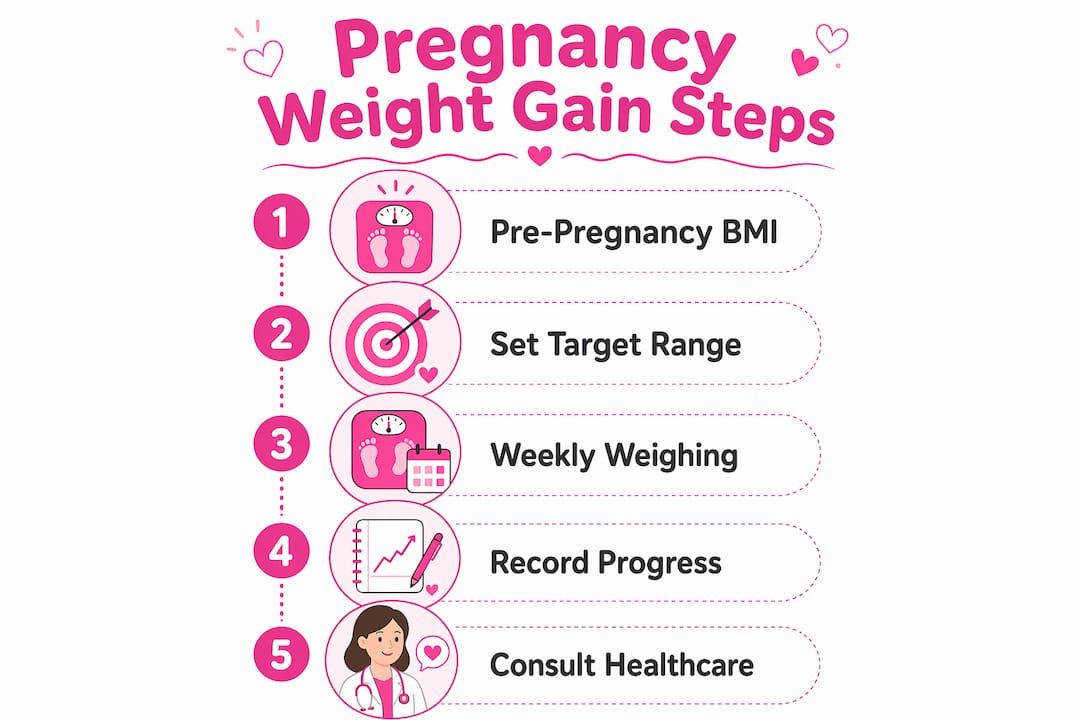
A pregnancy weight tracker calculates your personal weight gain target using two key inputs: your pre-pregnancy weight and height. Those two numbers produce your pre-pregnancy BMI, which determines your recommended gain range for the full pregnancy.
The recommended weight gain ranges by BMI category are:
- Underweight (BMI below 18.5): 28–40 lbs
- Healthy weight (BMI 18.5–24.9): 25–35 lbs
- Overweight (BMI 25–29.9): 15–25 lbs
- Obesity (BMI 30 and above): 11–20 lbs
Each category reflects a different physiological need. A woman with a lower starting BMI needs more reserve to support fetal growth, while a woman with a higher BMI carries more stored energy already.
Once your target range is set, the tracker maps your actual weekly weight against a cumulative gain curve. That curve shows you whether you are on track, gaining faster than recommended, or falling behind. The tracker updates your status each time you log a new weight.

Understanding where that weight actually goes helps you trust the numbers. Pregnancy weight gain breaks down across multiple body components: the baby accounts for roughly 7–8 lbs, the placenta for about 1.5 lbs, amniotic fluid for around 2 lbs, increased blood volume for 3–4 lbs, and fat stores for 6–8 lbs. The rest comes from breast and uterine tissue growth. None of that is excess weight. All of it serves a purpose.
What types of pregnancy weight trackers are available?
Pregnancy weight trackers range from simple paper charts to full-featured apps with clinical reporting tools. Each format has real strengths depending on what you need.
Paper-based trackers are low-tech and reliable. You record your weight in a printed chart each week and compare it visually to a reference range. They cost nothing, require no device, and never crash. The downside is that they do not calculate trends automatically or alert you when something looks off.
Digital apps do the math for you. Data-driven apps focus on precise logging, wearable device integration, and clinical trend reports you can share with your doctor. Content-focused apps offer more editorial guidance, articles, and community features alongside basic tracking. Some apps are free. Others run on premium models, with pricing around $24.99 per year for advanced features.
When choosing an app, look for these features:
- BMI-based target range setup at registration
- Weekly logging with trend visualization
- Alerts for weight changes outside your recommended range
- PDF or data export for healthcare provider sharing
- Integration with Apple Health or wearable devices
Pro Tip: Review an app’s privacy policy before entering your health data. Some apps share data with sponsors or third parties. Look for clear data ownership language before you sign up.
The best tracker is the one you will actually use consistently. A paper chart you fill in every week beats a premium app you open twice. Start simple and add features as your comfort grows.
How to track pregnancy weight gain effectively
Consistent tracking produces useful data. Inconsistent tracking produces noise. The difference comes down to a few habits you build from the start.
-
Weigh yourself at the same time each week. Morning is best, right after using the bathroom and before eating or drinking. Wear minimal clothing. Daily variability from food, fluid, and clothing can shift your reading by 2–3 lbs, so timing and conditions matter.
-
Log your weight immediately after stepping off the scale. Memory is unreliable. Enter the number directly into your app or chart while it is fresh.
-
Watch the trend, not the week. A single week’s number tells you almost nothing. A four-week trend tells you a great deal. Weight gain is typically slow in the first trimester, around 1–4.5 lbs total, then increases to 1–2 lbs weekly through the second and third trimesters. A bump one week followed by a flat week is normal.
-
Flag rapid changes for your provider. A gain of more than 1 kg per week after 28 weeks can signal complications like pre-eclampsia or fluid retention. Report rapid weight gain to your clinician promptly rather than waiting for your next scheduled appointment.
-
Pair weight data with nutrition notes. Log what you are eating alongside your weight. That combination gives your provider a richer picture than numbers alone. It also helps you spot patterns, like weight plateaus tied to nausea or appetite changes in the first trimester.
Pro Tip: If you are concerned about a week of unexpected weight loss, read about losing weight during pregnancy to understand when it is normal and when it warrants a call to your doctor.
Tracking works best when it informs conversations, not anxiety. The goal is a consistent record, not a perfect score every week.
What are the benefits of using a pregnancy weight tracker?
A pregnancy weight log does more than count pounds. It generates a health record that supports better decisions for you and your care team.
Early risk detection is one of the clearest benefits. Pregnancy weight monitoring supports early identification of gestational diabetes, pre-eclampsia, and fetal growth concerns. These conditions often show up first as weight pattern changes before other symptoms appear.
Better clinical communication is another direct benefit. When you arrive at a prenatal appointment with weeks of logged data, your provider sees a trend rather than a single snapshot. Advanced tracking apps allow direct data sharing with obstetricians through integrations with devices like Apple Health, improving medical monitoring and response time.
Additional benefits include:
- Personalized nutrition and activity guidance based on your actual gain curve
- Reduced anxiety from knowing your numbers are within range
- Documented evidence for insurance or specialist referrals if complications arise
- Motivation to maintain consistent healthy habits throughout all three trimesters
“Pregnancy is about gaining healthy tissue and fluids, not eating for two. Nutritional quality matters far more than doubling your calorie intake.”
That distinction matters. Many first-time mothers worry they are not eating enough or eating too much. A tracker grounded in BMI-based guidelines replaces guesswork with a clear, evidence-based target. It also helps you have more productive conversations with your provider about common prenatal screenings that monitor your overall pregnancy health alongside weight.
Documenting weight alongside nutrition and symptoms generates richer clinical narratives that improve healthcare consultations. That richer record is especially valuable if you switch providers or deliver at a hospital that does not have your full prenatal history.
Key Takeaways
A pregnancy weight tracker is the most direct tool you have for monitoring whether your weight gain aligns with ACOG and Institute of Medicine guidelines throughout all three trimesters.
| Point | Details |
|---|---|
| BMI sets your target range | Your pre-pregnancy BMI determines whether your recommended gain is 11–20 lbs or 28–40 lbs. |
| Weekly logging beats daily weighing | One consistent weekly weigh-in at the same time produces cleaner trend data than daily fluctuations. |
| Rapid gain needs prompt attention | Gaining more than 1 kg per week after 28 weeks warrants a call to your healthcare provider. |
| Apps vary by purpose | Data-driven apps support clinical reporting; content-focused apps offer editorial guidance and community features. |
| Tracking supports early risk detection | Consistent weight logs help identify gestational diabetes and pre-eclampsia before other symptoms appear. |
Why I think weight tracking deserves more attention than it gets
At Boy or Girl, we talk with expectant mothers every day. One pattern stands out: most first-time mothers start tracking their weight only after a provider flags a concern. That is the wrong time to start.
A tracker used from week six gives you a baseline. A tracker started at week 28 gives you a reaction. The difference in clinical value is significant. Trends only become visible when you have enough data points to see them.
The other thing I have noticed is that mothers who track consistently report feeling more confident at prenatal appointments. They come in with questions grounded in their own data, not just anxiety. That shift in dynamic, from passive patient to informed participant, changes the quality of the conversation.
Technology has made this easier than ever. Apps that sync with wearables and export clinical reports mean your weight log can travel directly to your provider’s inbox before your appointment even starts. That is a real change from the paper chart you used to hand over at the front desk.
My honest advice: pick a tracker you trust, set it up in your first trimester, and commit to one weigh-in per week. Do not obsess over individual numbers. Watch the four-week trend. And when something looks off, call your provider the same day. The tracker is a guide, not a diagnosis. Use it as one.
How Boy or Girl supports your pregnancy health
Tracking your weight is one piece of a larger picture. Boy or Girl brings together expert guidance, personalized diet plans, and a supportive community to help you feel confident at every stage of your pregnancy.

The Boy or Girl XY Method combines pregnancy monitoring features with gender prediction tools, nutritional guidance, and direct access to expert consultations. Whether you want to understand your weight gain curve or connect with other expectant mothers, Boy or Girl gives you a platform built specifically for your needs. You can also connect with pregnant moms in the community to share experiences and get real support from women who understand exactly what you are going through.
FAQ
What is a pregnancy weight tracker used for?
A pregnancy weight tracker monitors your weekly weight gain against medically recommended ranges based on your pre-pregnancy BMI. It helps you and your healthcare provider identify whether your gain is on track, too fast, or too slow.
How often should I weigh myself during pregnancy?
Once per week is the standard recommendation. Weigh yourself at the same time each week, ideally in the morning after using the bathroom, wearing minimal clothing, to get consistent and comparable readings.
What weight gain is considered normal during pregnancy?
Normal weight gain depends on your pre-pregnancy BMI. Healthy-weight women are advised to gain 25–35 lbs total. Underweight women may gain up to 40 lbs, while women with obesity are advised to limit gain to 11–20 lbs.
When should I contact my doctor about my pregnancy weight?
Contact your provider if you gain more than 1 kg in a single week after 28 weeks, or if you experience sudden weight loss at any point. Both patterns can indicate complications that need prompt evaluation.
Are free pregnancy weight tracker apps reliable?
Free apps can be reliable for basic logging and trend visualization. Premium apps typically add wearable integration, clinical export features, and more detailed reporting. Review each app’s privacy policy before entering your personal health data.
Visita nuestras redes sociales
Recommended
Best SheBirth.com Alternatives for Pregnancy Support

Pregnancy Partner Support Tips and Examples That Work

Amniocentesis Gender Detection: Accuracy, Risks, and What to Expect

How to Download Pregnancy Platform Progress Reports

Why Pregnancy Trimesters Are Divided: A Clear Medical Guide

Pregnancy Budget Planning Checklist for Expectant Parents