


Mood Tracker for Pregnancy: Your 2026 Emotional Wellness Guide

Índice
- What is a mood tracker for pregnancy, and why does it matter?
- How does mood tracking benefit expectant mothers?
- What types of mood trackers work best during pregnancy?
- How to effectively track and interpret your mood during pregnancy
- What are the common mood patterns during pregnancy?
- What I have learned about mood tracking during pregnancy
- Boy or Girl supports your emotional wellness during pregnancy
- FAQ
- Key takeaways
- Recommended
A mood tracker for pregnancy is a structured method of recording your emotional state each day to monitor mental health and build self-awareness throughout the gestation period. Also called a perinatal mood journal or emotional wellness log, this practice helps you spot patterns, recognize warning signs, and have more productive conversations with your care provider. Pregnancy brings real hormonal shifts that affect how you feel from one hour to the next. Up to 20% of new mothers experience postpartum mood disorders, and consistent tracking before birth creates the baseline data needed for earlier detection. Starting a mood tracker now gives you a clear picture of your emotional health before, during, and after delivery.
What is a mood tracker for pregnancy, and why does it matter?
A pregnancy mood tracker is any system, digital or written, that records how you feel each day alongside physical symptoms like sleep quality, energy, and appetite. The goal is not to document every emotion in detail. The primary goal is curiosity and self-awareness, helping you understand emotional triggers rather than just logging symptoms.
Pregnancy changes your brain chemistry. Estrogen and progesterone levels shift dramatically across all three trimesters, and those shifts affect mood, sleep, and cognition. A tracker turns those invisible changes into visible data. When you can see that your anxiety spikes every sunday before a Monday appointment, you can plan something calming for that evening.

Mood tracking also connects emotional health to physical health. Poor sleep worsens anxiety. Low activity levels drop energy and mood. A good tracker captures all of these together, giving you a fuller picture than any single symptom could provide. Tracking emotional health alongside physical symptoms in an integrated log enhances pattern visibility and supports better self-care decisions.
How does mood tracking benefit expectant mothers?
Mood tracking during pregnancy delivers measurable mental health benefits, not just a general sense of wellness. Structured emotional writing during the perinatal period reduces anxiety symptoms by up to 28% and depressive symptoms by 22% with sessions of 15–20 minutes, three times a week. That is a significant reduction achievable without medication or clinical appointments.
The benefits extend well beyond anxiety relief:
- Early detection. A consistent log creates a personal emotional baseline. When your mood drops below that baseline for more than a week, you and your provider can act before symptoms worsen.
- Better provider conversations. Healthcare providers value specific aggregated mood data more than subjective complaints for screening and intervention. Bringing a two-week mood log to your prenatal visit gives your doctor something concrete to work with.
- Reduced isolation. Writing down your feelings, even briefly, reduces the sense that your emotions are chaotic or out of control. Naming an emotion gives you distance from it.
- Stronger self-awareness. Tracking builds the habit of checking in with yourself daily. Over time, you get faster at recognizing when something feels off and why.
Pro Tip: Set a daily phone reminder at the same time each day, such as right after breakfast, to log your mood. Consistency matters more than detail.
Research also shows that combining self-reported mood data with digital behavior logs significantly improves early prediction of depressive symptoms within a 30-day period during pregnancy. That means your daily two-minute check-in carries real clinical weight.
What types of mood trackers work best during pregnancy?
Mood trackers fall into three broad categories: manual methods, standalone digital tools, and integrated pregnancy apps. Each has real strengths depending on your lifestyle and how much detail you want to capture.
Manual methods
A paper journal, a notes app, or even a voice memo recorded at the end of the day all count as mood tracking. Manual methods require no setup and no subscription. They work best for mothers who prefer narrative writing and want to capture context, not just a number. The downside is that paper logs are hard to analyze for patterns without rereading weeks of entries.
Standalone mood tracking apps
Dedicated mood tracking apps let you log a rating from 1–10, tag emotions, and add brief notes. Many generate weekly charts automatically. These are easy to use and low-commitment. The limitation is that they do not connect emotional data to pregnancy-specific physical symptoms like nausea, sleep, or fetal movement.
Integrated pregnancy apps
Pregnancy apps that include mood tracking alongside symptom logging give you the most complete picture. When you can see that your mood dropped on the same days your sleep was under five hours, the connection becomes obvious. Boy or Girl offers this kind of integrated tracking, combining emotional check-ins with physical symptom logs in one place.
The table below compares the three approaches across key factors:
| Approach | Ease of use | Pattern analysis | Pregnancy-specific context |
|---|---|---|---|
| Paper journal or notes app | High | Low (manual review) | None built in |
| Standalone mood app | High | Medium (auto charts) | None built in |
| Integrated pregnancy app | Medium | High (combined data) | Full integration |
Key consideration: Choose a method you will actually use every day. A simple notes app you open consistently beats a feature-rich app you abandon after a week.
How to effectively track and interpret your mood during pregnancy
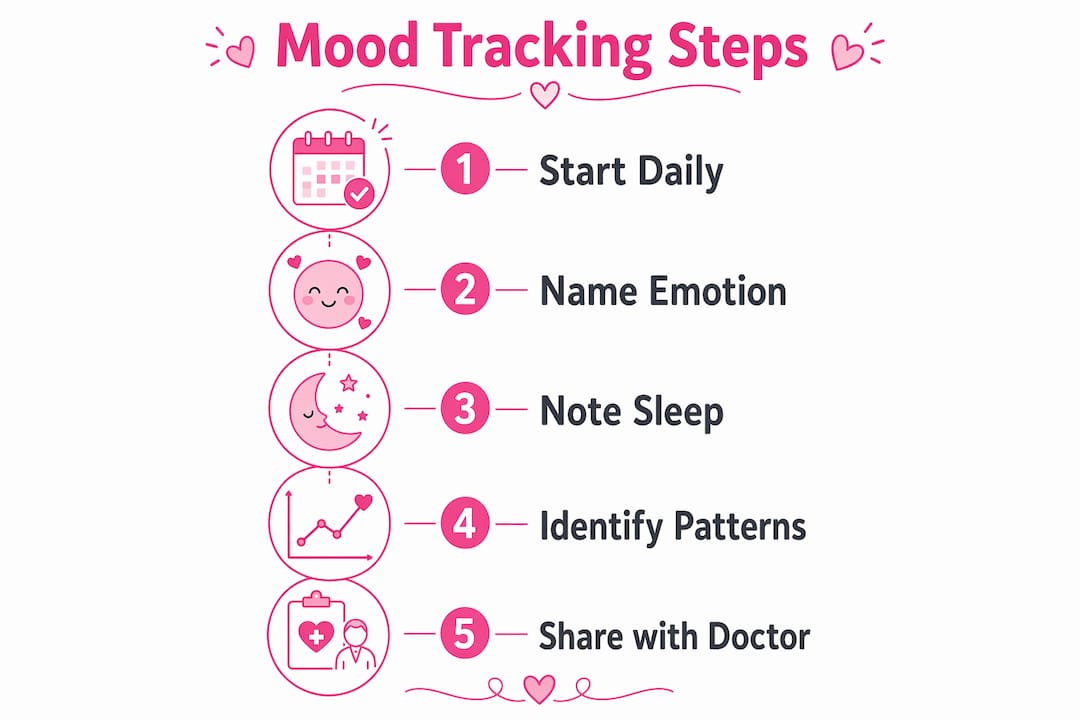
Consistent tracking requires a simple daily routine. The following steps build a habit that sticks and produces data you can actually use.
- Pick one time of day. Morning check-ins capture your rested state. Evening check-ins capture the full day. Either works. Switching times daily makes patterns harder to read.
- Name the emotion, not just the number. Rate your mood from 1–10, then add one word: “anxious,” “calm,” “irritable,” “hopeful.” That single word adds context a number alone cannot provide.
- Log one physical factor. Note your sleep hours, activity level, or whether you ate well. This one extra data point connects physical and emotional health without adding more than 30 seconds to your routine.
- Review weekly, not daily. Daily entries feel random. Weekly reviews reveal patterns. Set aside five minutes every Sunday to look back at the week.
- Flag anything below a 4. If your mood rating drops below 4 for three or more consecutive days, bring that data to your next prenatal appointment.
Daily mood tracking should take about two minutes, focused on naming the emotion rather than elaborate journaling. Overcomplicated tracking reduces how long mothers stick with it.
Pro Tip: If you miss a day, do not try to reconstruct it. Just pick up the next day. Gaps are normal and do not ruin the data.
Tracking for as little as two weeks can reveal significant patterns like appointment-related anxiety or energy dips linked to inactivity. You do not need months of data to start seeing useful insights. Two weeks gives you enough to have a real conversation with your provider.
Presenting mood tracking data to clinicians enables more precise screening and targeted interventions during prenatal visits. Your log is not just a personal diary. It is a clinical tool.
What are the common mood patterns during pregnancy?
Pregnancy mood changes follow recognizable patterns, but not all of them are “normal” in the clinical sense. Understanding the difference protects your health.
Typical patterns
Anxiety before prenatal appointments is one of the most common mood spikes expectant mothers report. Energy dips in the first trimester and again in the third trimester are also typical, driven by hormonal shifts and physical demands. Mood often improves in the second trimester as nausea eases and energy returns.
When patterns signal something more
Mood changes during pregnancy are not all normal. Prenatal depression shares symptoms with typical pregnancy fatigue, including low energy, poor sleep, and reduced motivation. Without a baseline, these symptoms are easy to dismiss. With a baseline, a sustained drop becomes visible and actionable.
The table below outlines common mood patterns and what they typically indicate:
| Pattern | Likely cause | Action needed |
|---|---|---|
| Anxiety before appointments | Anticipatory stress | Plan a calming activity beforehand |
| Energy dips in trimester 1 and 3 | Hormonal and physical changes | Rest, light activity, nutrition check |
| Irritability after poor sleep | Sleep disruption | Prioritize sleep hygiene |
| Persistent low mood for 7+ days | Possible prenatal depression | Contact your care provider |
| Mood improvement in trimester 2 | Hormonal stabilization | Normal, no action needed |
Mood tracking data creates a personal emotional baseline, making it easier to detect early warning signs of mood disorders that can be missed as normal pregnancy fatigue. That baseline is the most clinically valuable thing your tracker produces. Without it, both you and your provider are working without a reference point.
You can also connect with other pregnant mothers who track their moods, which helps normalize the experience and provides real-world context for what you are feeling.
What I have learned about mood tracking during pregnancy
At Boy or Girl, we have worked with thousands of expectant mothers, and the pattern we see most often surprises people. The mothers who benefit most from mood tracking are not the ones who write the most. They are the ones who track the most consistently, even when the entry is just one word and a number.
Most mothers start tracking because they feel out of control emotionally. What they discover is that their emotions are actually quite predictable once they have two weeks of data. That predictability is not limiting. It is freeing. When you know your mood reliably drops on low-sleep nights, you stop wondering if something is wrong with you and start planning better sleep.
The other thing worth saying directly: mood tracking is not a replacement for professional care. If your data shows a persistent pattern of low mood, that information belongs in your provider’s hands, not just your phone. The tracker is the tool. Your care team is the support system. Both matter.
Physical activity also plays a bigger role than most mothers expect. Gentle exercise during pregnancy consistently shows up in mood data as a positive factor, even when the activity is just a 20-minute walk. If you track both mood and movement, you will likely see this connection within your first two weeks.
Boy or Girl supports your emotional wellness during pregnancy
Emotional wellness is as important as physical health during pregnancy, and Boy or Girl is built around that belief.
The Boy or Girl pregnancy platform combines mood and energy tracking with physical symptom logging, giving you a unified view of how you feel each day. You can log your emotional check-in alongside sleep, nutrition, and activity data, so patterns become visible without extra effort. The platform also connects you with expert consultations and a supportive community of mothers at every stage of pregnancy. Whether you are in your first trimester or approaching your due date, Boy or Girl gives you the tools and the support to take your emotional health seriously. Explore the pregnancy resources available through the platform to get started today.
FAQ
What is a mood tracker for pregnancy?
A mood tracker for pregnancy is a daily practice of recording your emotional state, typically with a rating and a brief note, to monitor mental health and identify patterns throughout the gestation period. It functions as both a self-care tool and a clinical resource for prenatal care discussions.
How often should I track my mood during pregnancy?
Daily tracking produces the most useful data. Two minutes per day focused on naming your emotion is enough to reveal meaningful patterns within two weeks.
Can mood tracking help prevent postpartum depression?
Mood tracking does not prevent postpartum depression, but it creates a baseline that makes early detection significantly easier. Up to 20% of new mothers experience postpartum mood disorders, and a tracked baseline helps providers intervene sooner.
What is the best format for a pregnancy mood journal?
The most effective format combines a numerical rating (1–10) with one emotion word and one physical factor like sleep or activity. This takes under two minutes and produces data that is easy to review and share with your care provider.
When should I show my mood tracking data to my doctor?
Bring your mood log to every prenatal appointment. Healthcare providers value aggregated mood data over subjective descriptions, and a two-week log gives your provider a concrete basis for screening and intervention decisions.
Key takeaways
A mood tracker for pregnancy is most effective when it combines a daily numerical rating with one emotion word and one physical factor, reviewed weekly to reveal patterns that support both self-care and clinical conversations.
Visita nuestras redes sociales
| Point | Details |
|---|---|
| Daily tracking takes two minutes | Name the emotion and rate it 1–10 to build a consistent, usable log. |
| Two weeks reveals real patterns | Short tracking periods expose anxiety spikes and energy dips linked to specific triggers. |
| Baseline data protects your health | A personal emotional baseline makes prenatal depression easier to detect and distinguish from normal fatigue. |
| Providers need numbers, not feelings | Aggregated mood ratings give clinicians a concrete basis for screening and targeted care. |
| Integrated tracking works best | Logging mood alongside sleep, activity, and nutrition reveals connections a standalone mood log cannot show. |
Recommended
Best SheBirth.com Alternatives for Pregnancy Support

Pregnancy Partner Support Tips and Examples That Work

Amniocentesis Gender Detection: Accuracy, Risks, and What to Expect

How to Download Pregnancy Platform Progress Reports

Why Pregnancy Trimesters Are Divided: A Clear Medical Guide

Pregnancy Budget Planning Checklist for Expectant Parents