


Types of Pregnancy Online Communities: 2026 Guide

Índice
- 1. What are the main types of pregnancy online communities?
- 2. Peer support groups for expectant parents
- 3. Specialized communities for mental health and high-risk pregnancies
- 4. How privacy settings and moderation shape community quality
- 5. Types of pregnancy online communities by format and platform
- 6. How to choose the right pregnancy community for your needs
- Key takeaways
- What I’ve learned from watching expectant parents find their communities
- A trusted space for your pregnancy experience
- FAQ
- Recommended
Pregnancy online communities are virtual groups where expectant parents share experiences, seek advice, and receive emotional and informational support throughout pregnancy and early parenthood. These peer support networks, also called prenatal online support groups, range from general forums to highly specialized spaces for high-risk pregnancies and perinatal mental health. A 2026 scoping review of 27 studies confirmed that emotional support is the most frequently reported benefit across all types of pregnancy online communities. Knowing which format fits your needs makes a real difference in how supported you feel.
1. What are the main types of pregnancy online communities?
Pregnancy online communities fall into several distinct categories based on their purpose, structure, and audience. The broadest division separates general peer support groups from specialized communities built around specific health conditions, pregnancy stages, or cultural identities. Understanding these categories helps you find a space where you genuinely belong.
General communities welcome all expectant parents and cover topics from first trimester symptoms to birth plans. Specialized communities focus on narrower needs, such as twin pregnancies, pregnancy loss, or perinatal anxiety. A third category includes platform-specific communities hosted on social media, dedicated apps, or nonprofit websites, each with different privacy and moderation standards.
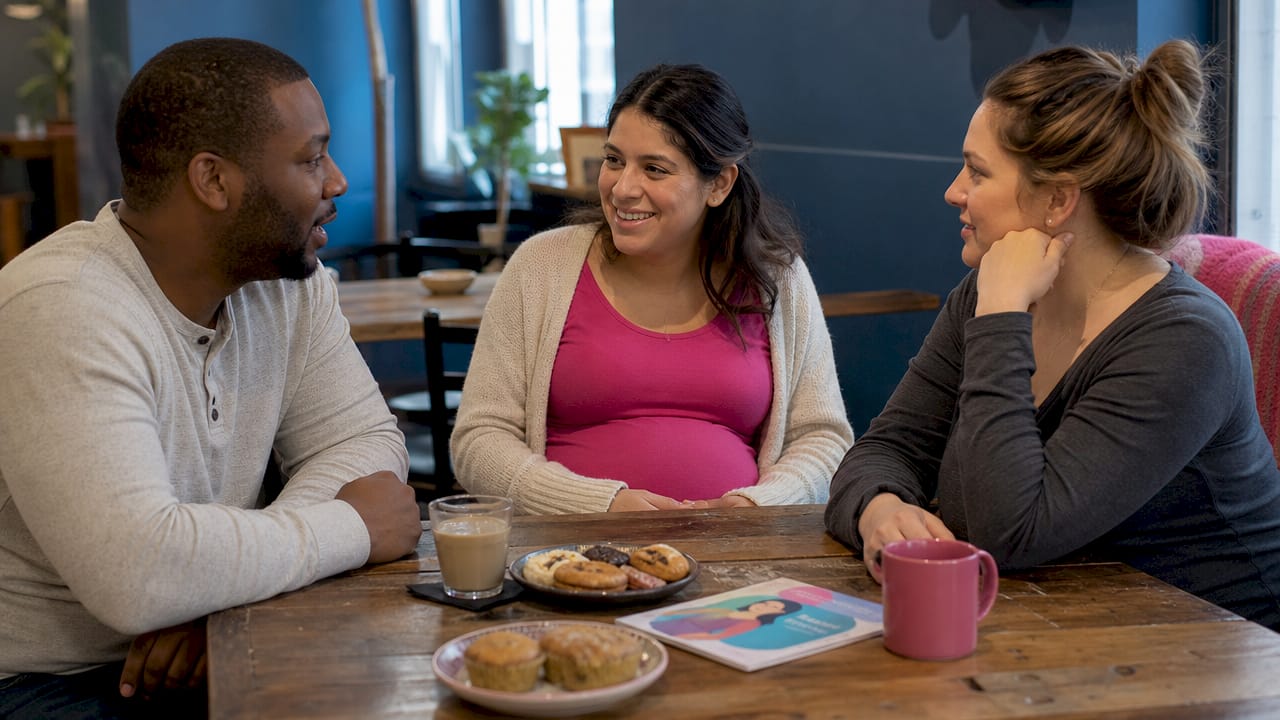
2. Peer support groups for expectant parents
Peer support groups are the most common format in pregnancy online communities. They function as interactive forums or chat groups where members share personal experiences and offer empathy to one another. Emotional support, including empathy and reassurance, is the most frequently reported benefit across all pregnancy peer support formats.
These groups work best when they include clear structure and consistent oversight. The features that define high-quality peer support groups include:
- Active moderation by trained facilitators who guide discussions and remove harmful content
- Smaller group sizes that allow members to build real relationships over time
- Defined focus areas such as trimester-specific groups or first-time parent spaces
- Privacy controls that let members share sensitive details without fear of public exposure
- Regular engagement prompts from moderators to keep conversations meaningful
Pro Tip: Look for groups that list their moderation policy publicly. A group with trained facilitators is far more likely to give you accurate, reassuring information than one with no oversight at all.
Peer support groups also serve as a bridge between formal medical care and everyday pregnancy life. You can ask questions you feel awkward raising with your doctor and get honest answers from people who have lived through the same experience. Boy or Girl hosts an active pregnancy forum where expectant parents exchange real stories and practical advice in a moderated space.
3. Specialized communities for mental health and high-risk pregnancies
Specialized online communities serve expectant parents whose circumstances fall outside the typical pregnancy experience. These groups address perinatal mood and anxiety disorders, high-risk medical conditions, and pregnancy loss with a depth that general forums cannot match.
Organizations like Postpartum Support International offer free moderated sessions for perinatal mood and anxiety disorders. Some therapist-led groups charge fees, but many nonprofit-backed options remain free. The key features of specialized communities include:
- Clinician involvement, where therapists or nurses participate in or lead discussions
- Condition-specific focus, such as groups for gestational diabetes, preeclampsia, or hyperemesis gravidarum
- Grief and loss support, offering dedicated spaces for pregnancy loss without the risk of encountering insensitive comments
- Charitable backing, where some platforms connect members to material aid alongside emotional support
Charitable organizations have extended this model into crisis settings. The Humaniti Foundation reports providing prenatal care and supplies to 288 high-risk pregnancies and distributing over 500 hygiene kits in camp settings as of early 2026. That scale shows how community support, whether digital or physical, reaches parents who have the fewest resources.
Culturally inclusive pregnancy platforms represent a growing subcategory here. These communities center the experiences of parents from specific cultural, linguistic, or ethnic backgrounds, filling a gap that mainstream forums rarely address.
4. How privacy settings and moderation shape community quality
Privacy and moderation are the two factors that most directly determine whether a pregnancy online community helps or harms its members. Without them, forums can become sources of anxiety rather than relief.
Privacy settings such as closed groups and anonymous participation increase members’ willingness to share personal information. That openness is what makes peer support genuinely useful. When expectant parents feel safe, they ask the questions that actually matter to them.
Unmoderated communities carry real risks. Generic pregnancy forums filled with alarming birth stories increase pregnancy anxiety, and rising demand for moderated, evidence-based spaces reflects how widely expectant parents recognize this problem. Active moderation prevents misinformation from spreading and keeps discussions grounded in accurate, supportive content.
Smaller groups with active moderators consistently produce more meaningful, sustained interactions than large, impersonal forums. Size matters because it determines whether you feel seen or lost in the crowd.
Pro Tip: Before joining any pregnancy community, check whether it has a visible moderator, a posted community policy, and a way to report harmful content. These three features predict a safer experience better than group size or platform name alone.
5. Types of pregnancy online communities by format and platform
The format of a community shapes how you interact with it as much as the topic does. Each platform type carries distinct advantages depending on what you need most.
| Format | Accessibility | Moderation level | Privacy | Best for |
|---|---|---|---|---|
| Dedicated pregnancy apps | High | High | High | First-time parents, daily check-ins |
| Closed social media groups | Medium | Variable | Medium | Peer connection, shared milestones |
| Message boards and forums | High | Low to medium | Low to medium | Research, broad Q&A |
| Nonprofit-hosted platforms | Medium | High | High | Mental health, high-risk pregnancies |
| Real-time chat groups | High | Low | Low to medium | Immediate support, active communities |
Dedicated pregnancy apps offer the most controlled environment. They typically pair community features with expert content, making them well-suited for first-time moms who want guidance alongside peer connection. Closed social media groups are easy to find and join, but moderation quality varies widely depending on who runs the group.
Message boards and open forums give you access to a large volume of shared experience, but the lack of consistent moderation means you may encounter inaccurate information or distressing stories. Nonprofit-hosted platforms tend to offer the strongest combination of moderation and privacy, particularly for mental health-focused communities. Real-time chat groups provide immediate responses, which is valuable during anxious moments, but they rarely maintain the same quality standards as structured forums.
For expectant parents managing physical discomfort alongside emotional stress, some communities also share resources on complementary care. Prenatal chiropractic support is one topic that comes up regularly in pregnancy wellness discussions, particularly in the second and third trimesters.
6. How to choose the right pregnancy community for your needs
Choosing the right community starts with identifying what you need most: emotional reassurance, practical information, or connection with parents in similar circumstances. These needs often overlap, but knowing your priority helps you filter options quickly.
Ask yourself these questions before committing to a group:
- Do you need a space focused on a specific condition, such as a twin pregnancy or a mental health concern?
- Do you prefer anonymous participation or are you comfortable using your real identity?
- Do you want a small, close-knit group or a large community with more diverse perspectives?
- Is the group moderated, and does it have a clear policy on misinformation?
Red flags that signal a community is not worth your time include frequent unverified medical claims, hostile responses to vulnerable questions, and no visible moderation. A group that makes you feel worse after visiting is not serving you, regardless of how large or active it appears.
Connecting with other pregnant moms through vetted platforms reduces the trial-and-error involved in finding the right fit. Pregnancy loss communities deserve special attention here. If you have experienced a loss, a dedicated space like a pregnancy loss support group provides a level of understanding that general forums rarely offer.
Key takeaways
The most effective pregnancy online communities combine active moderation, privacy controls, and a focused group size to deliver genuine emotional support and accurate information.
| Point | Details |
|---|---|
| Emotional support leads all benefits | Empathy and reassurance are the top reported benefits across all pregnancy community formats. |
| Moderation prevents harm | Active moderators reduce misinformation and protect members from anxiety-inducing content. |
| Smaller groups work better | Focused, smaller communities build stronger connections than large, impersonal forums. |
| Privacy drives openness | Closed or anonymous groups encourage members to share more honestly and seek real help. |
| Specialization fills critical gaps | Communities for high-risk pregnancies, mental health, and pregnancy loss serve needs general forums cannot meet. |
What I’ve learned from watching expectant parents find their communities
The communities that genuinely help expectant parents share one quality: they make people feel less alone without making them feel more afraid. That sounds simple, but it is harder to achieve than most platforms realize.
Large, open forums tend to amplify the loudest voices, and the loudest voices in pregnancy spaces are often the most alarming ones. A parent who had a smooth birth rarely posts about it. The ones who post are often processing something difficult. That imbalance skews the picture for first-time parents who are trying to understand what pregnancy is actually like.
What I have seen work consistently is the combination of a smaller group, a visible moderator, and a clear community norm around evidence-based sharing. When those three elements are present, the quality of conversation shifts. People ask real questions. They get real answers. They leave feeling steadier, not more anxious.
Privacy is the piece that most platforms underinvest in. Expectant parents carry deeply personal concerns, from fears about their baby’s health to relationship stress to financial pressure. A community that cannot protect that information will never get the honest participation it needs to be useful.
My advice is to try two or three communities before settling. The right one will feel different within the first few posts. You will notice that people respond with care, that moderators are present, and that the conversation stays grounded. That feeling is not accidental. It is the result of deliberate design choices that the best platforms make from the start.
A trusted space for your pregnancy experience
Finding the right community takes time, but you do not have to search alone. Boy or Girl is built specifically for expectant parents who want expert guidance, personalized tools, and a supportive community in one place.

The Boy or Girl platform combines moderated forums, expert consultations, and personalized resources including gender prediction tools and tailored diet plans. Every feature is designed to make your pregnancy feel supported, not stressful. Explore the XY chromosomal prediction method and connect with a community that takes your pregnancy seriously. Boy or Girl also supports charitable initiatives that provide direct assistance to mothers in need, so your participation contributes to something larger than your own experience.
FAQ
What are the main types of pregnancy online communities?
The main types include general peer support groups, specialized communities for high-risk pregnancies or mental health, platform-specific groups on social media or apps, and nonprofit-hosted forums. Each type differs in moderation level, privacy, and focus area.
Why does moderation matter in pregnancy support groups?
Active moderation prevents misinformation from spreading and reduces anxiety caused by alarming or inaccurate stories. Groups with trained facilitators consistently produce safer, more supportive discussions.
Are free pregnancy support groups effective?
Yes. Organizations like Postpartum Support International offer dozens of free moderated groups for perinatal mood and anxiety disorders that are as effective as paid options when they include active facilitation.
How do I know if a pregnancy community is safe to join?
Look for a visible moderation policy, a way to report harmful content, and privacy settings that protect member information. Groups without these features carry a higher risk of exposing you to misinformation or distressing content.
What is the best type of community for first-time moms?
Dedicated pregnancy apps with built-in moderation and expert content work best for first-time moms. They combine peer connection with reliable information, reducing the risk of encountering anxiety-inducing stories common in large, unmoderated forums.
Visita nuestras redes sociales
Recommended
Best SheBirth.com Alternatives for Pregnancy Support

Pregnancy Partner Support Tips and Examples That Work

Amniocentesis Gender Detection: Accuracy, Risks, and What to Expect

How to Download Pregnancy Platform Progress Reports

Why Pregnancy Trimesters Are Divided: A Clear Medical Guide

Pregnancy Budget Planning Checklist for Expectant Parents